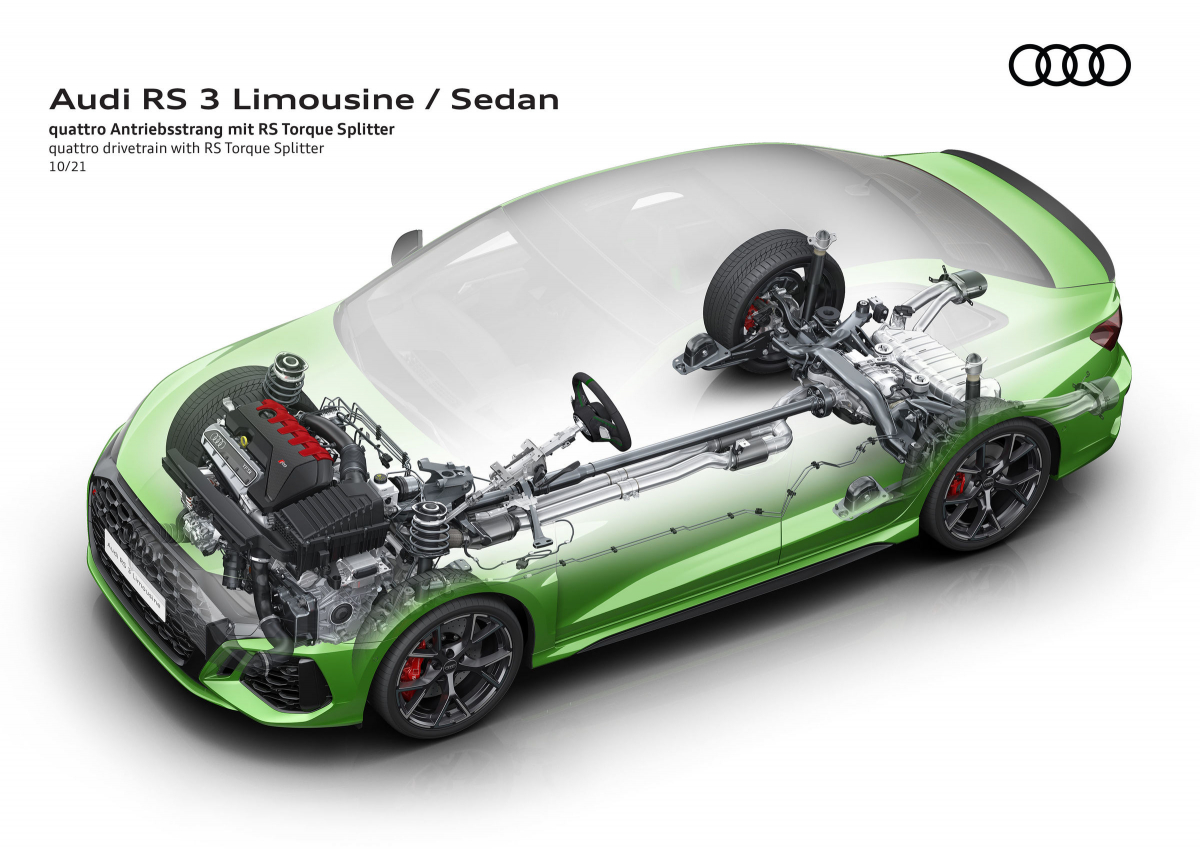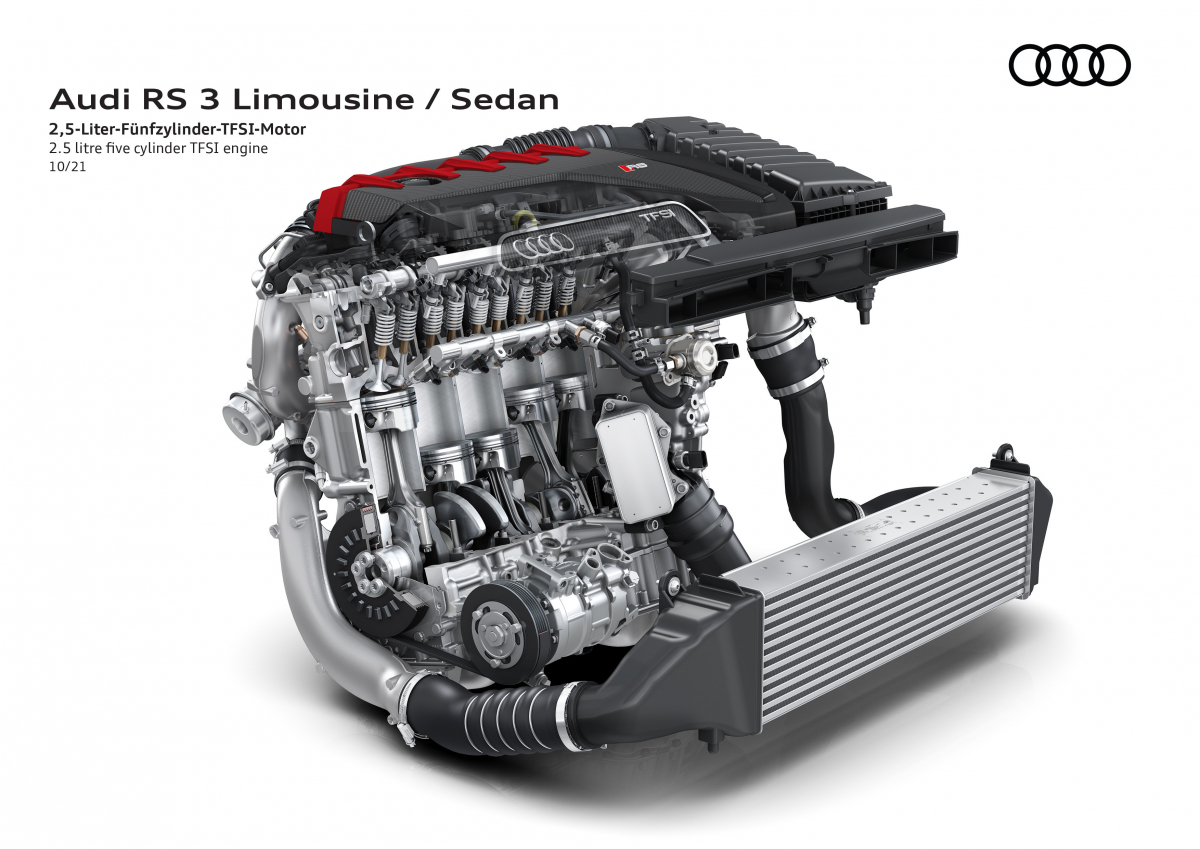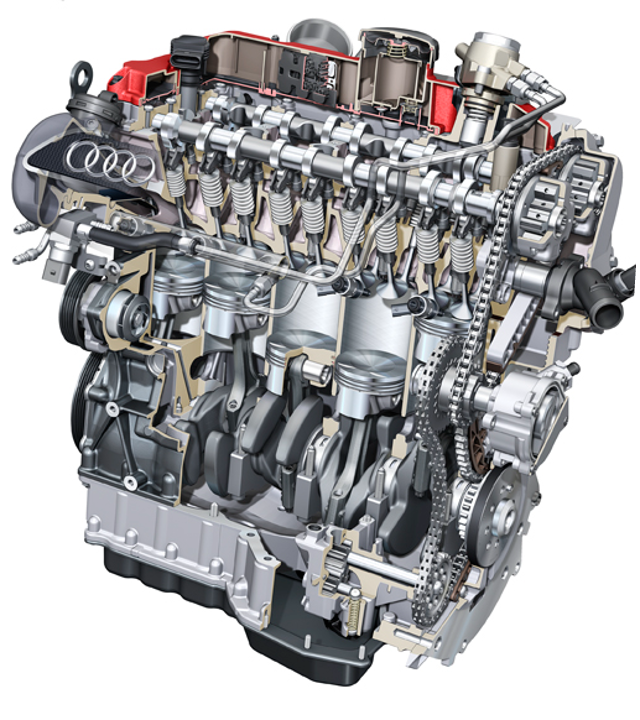
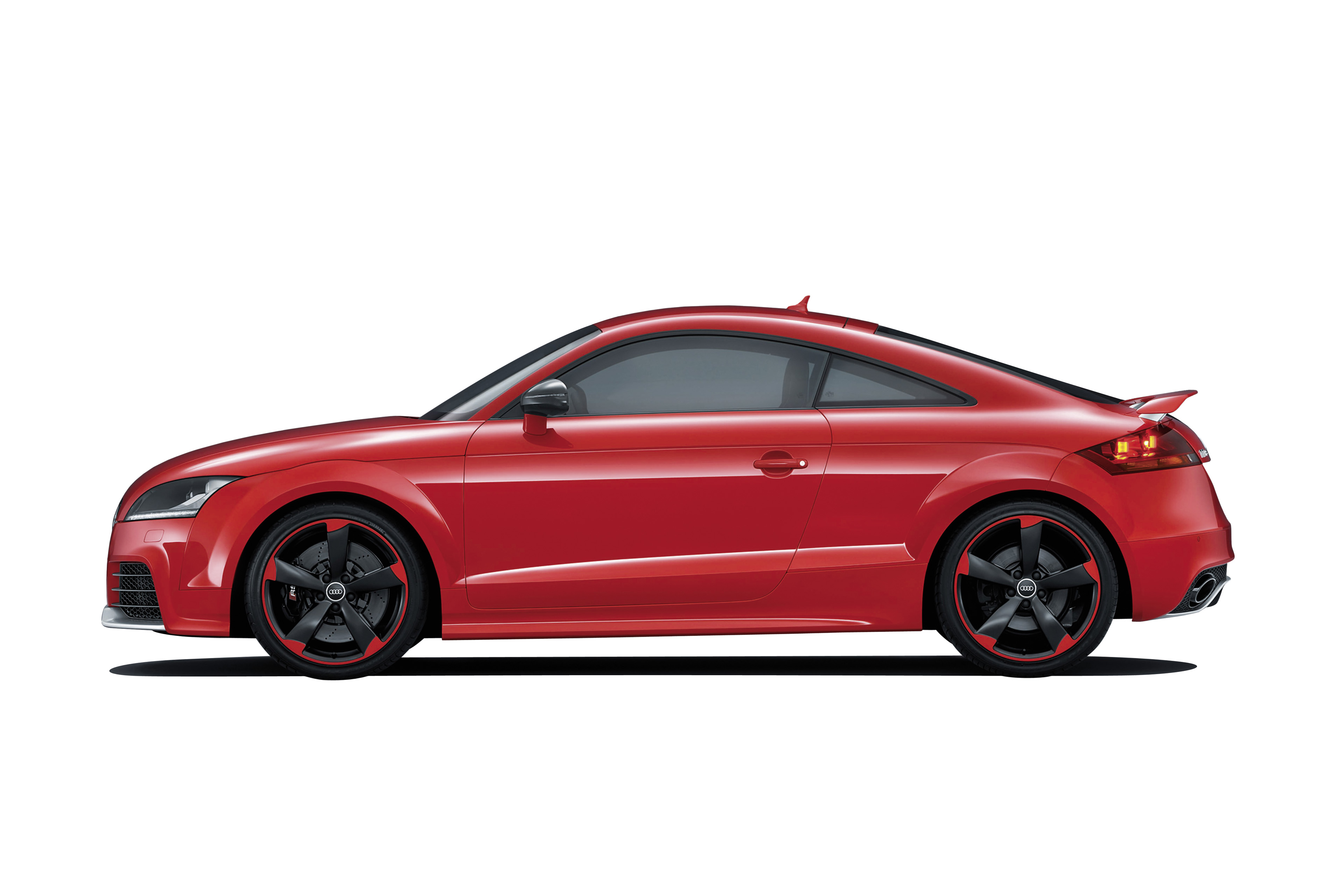
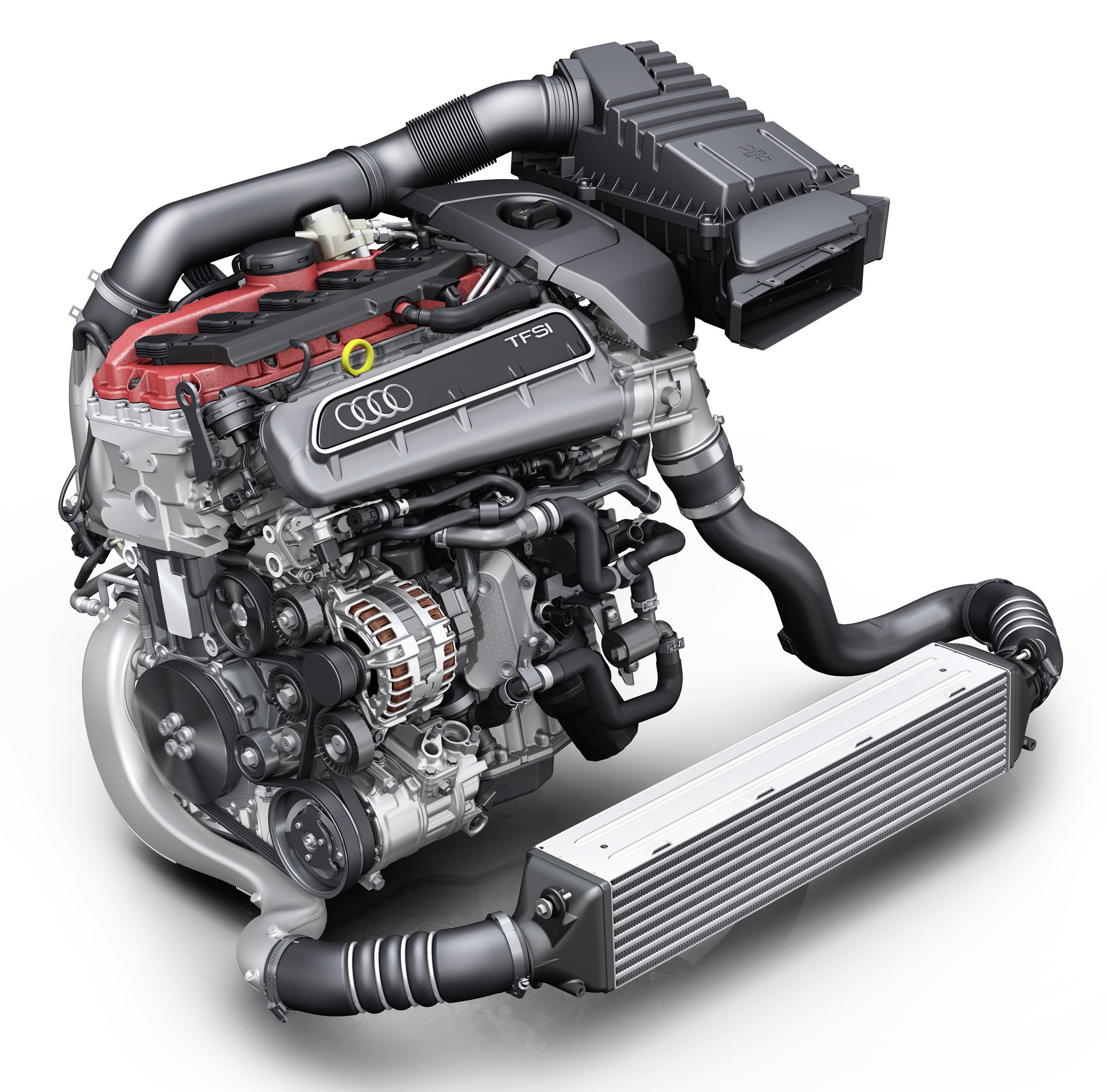
With the introduction of the 2.5 TFSI EA855 in the Audi TT RS in 2009, Audi reintroduced the five-cylinder engine after a twelve-year hiatus. The transversely mounted inline five-cylinder had a displacement of 2,480 cm³ and featured a vermicular graphite cast iron engine block, direct fuel injection, four valves per cylinder and an exhaust turbocharger. Bore and stroke measured 82.5 mm and 92.8 mm respectively. In its first version, the engine produced 340 hp and 450 Nm of torque. Its robust cast iron construction provided substantial strength reserves, allowing high boost pressures and significant increases in power output.
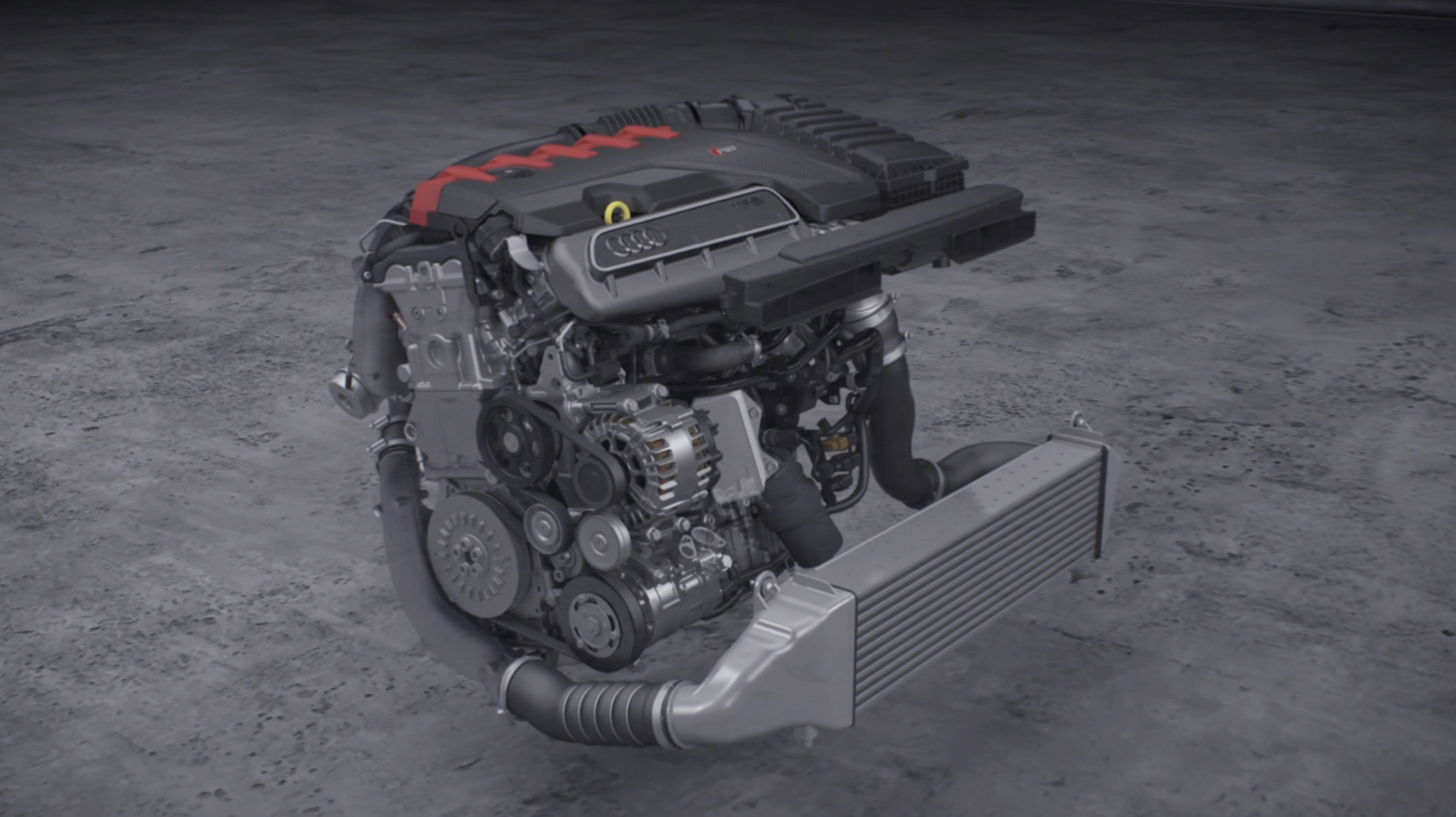
From 2012 onwards, Audi introduced further developed variants, including the CEPB version in the TT RS plus, which produced 360 hp.
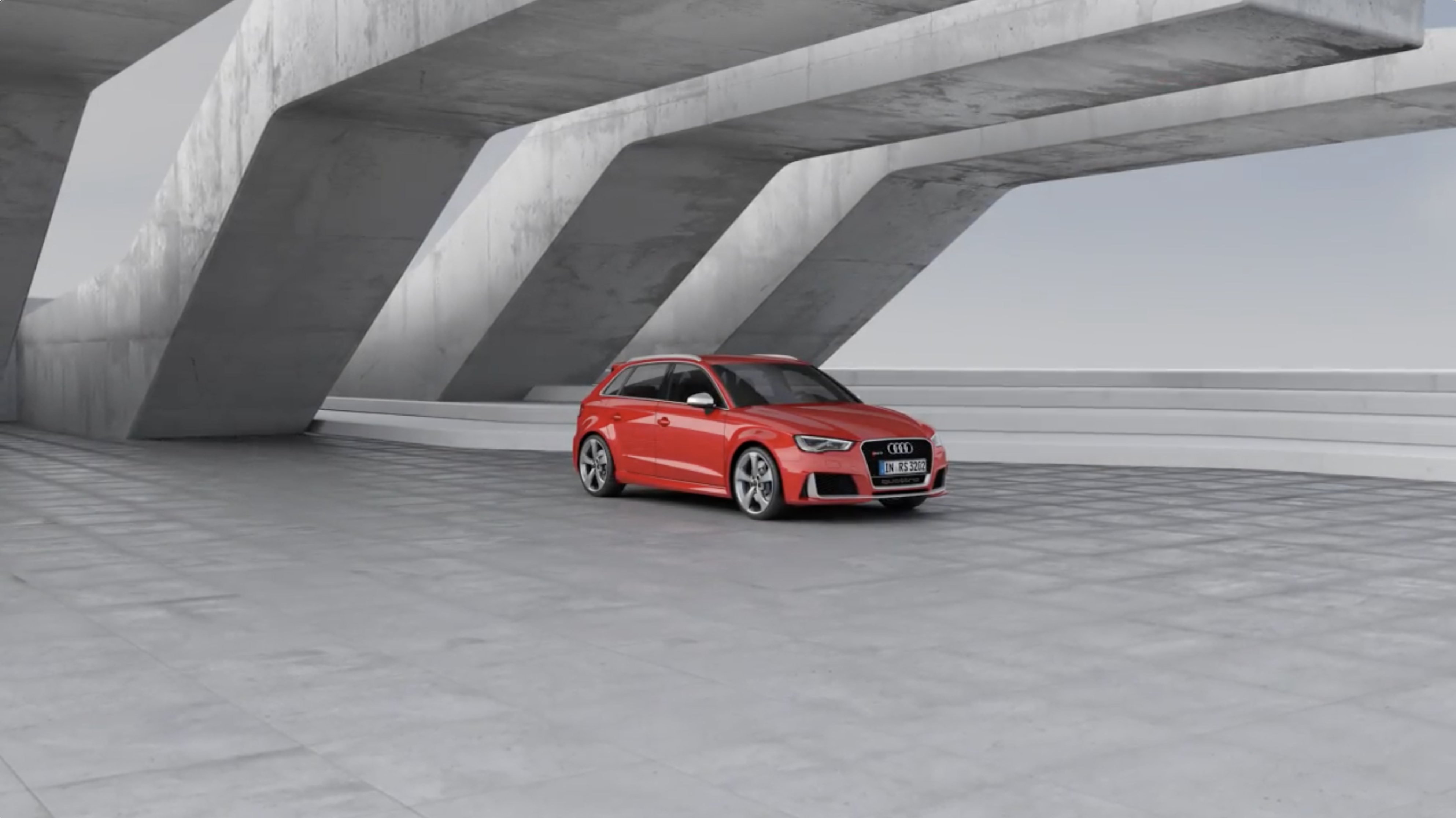
Later versions included the CZGA and CZGB engine variants, introduced in the RS Q3 and RS 3.
Continuous refinements to boost pressure, engine management, fuel injection and gas exchange gradually increased output to as much as 367 hp and 465 Nm of torque, while the engine’s fundamental design remained unchanged.

A major technological leap came with the introduction of the EA855 evo in 2016. The entire crankcase was completely redesigned. Replacing the heavy cast iron block, the new engine featured an aluminium crankcase with plasma-coated cylinder bores. The crankshaft, connecting rods, pistons and oil pan were also systematically optimised for lightweight construction. As a result, engine weight was reduced by around 26 kg. At the same time, throttle response, axle load distribution and overall efficiency were significantly improved.
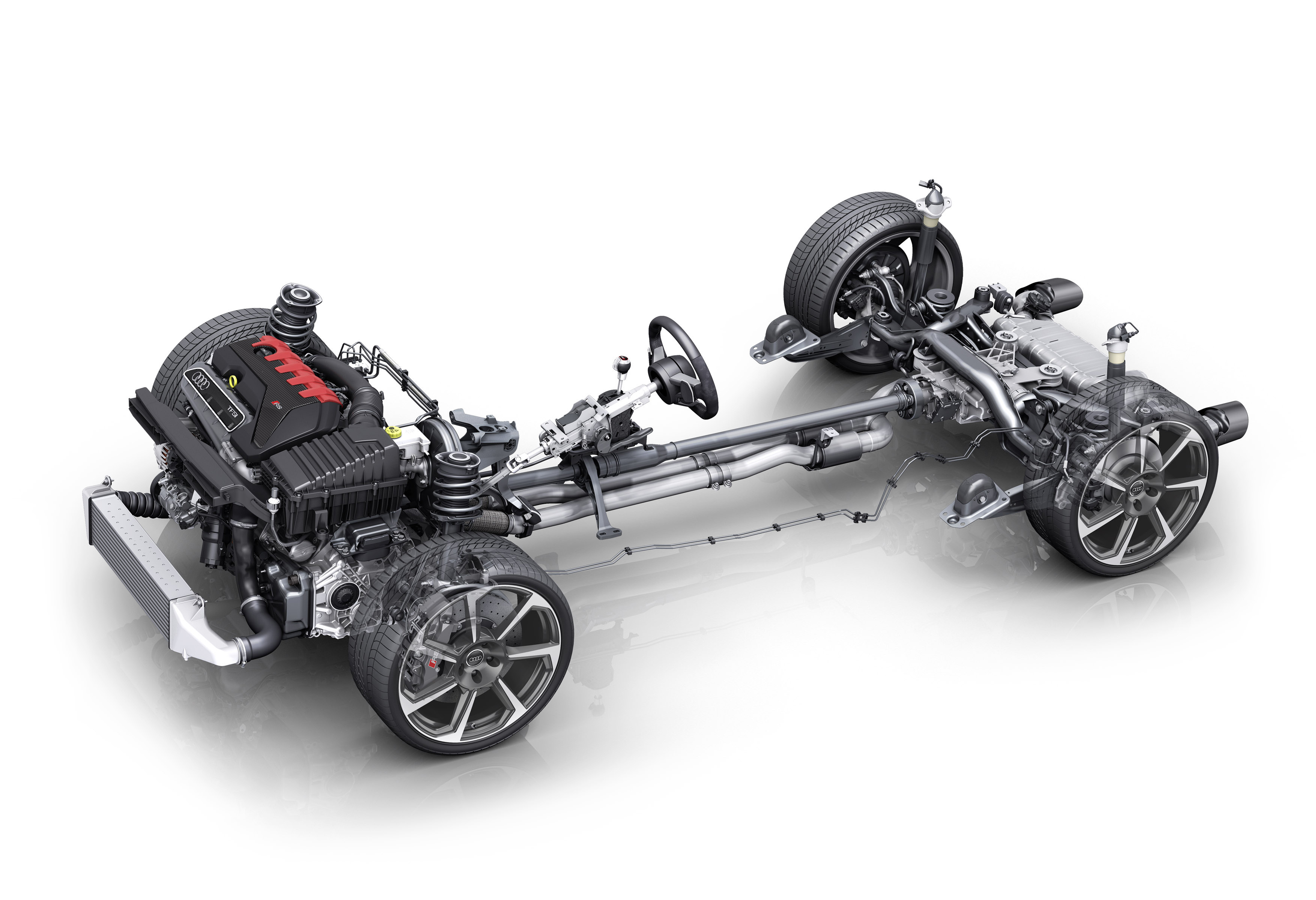
The first version of the EA855 evo, identified by the engine code DAZA, produced 400 hp and 480 Nm of torque. Technical highlights included a combined port and direct fuel injection system, the Audi Valvelift System on the exhaust side, optimised combustion chamber cooling, and a newly developed turbocharger with improved efficiency. The engine was used in the Audi TT RS (FV) and the RS 3 (8V facelift).
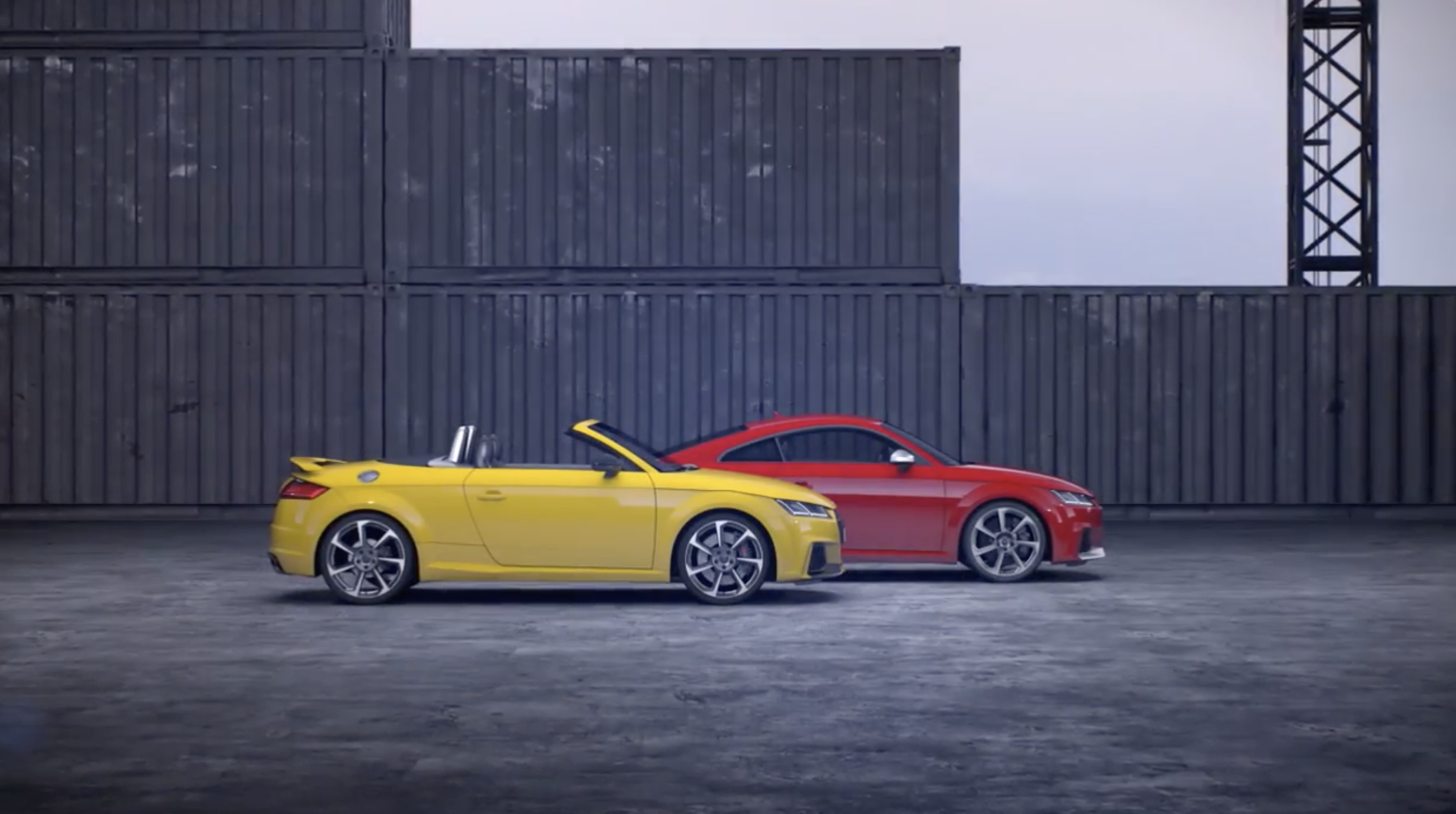
To meet the requirements of the Euro 6d emissions standard, Audi further refined the EA855 evo. The DNWA and later DNWC engine variants were equipped with a gasoline particulate filter, an updated exhaust aftertreatment system, new emissions control strategies and revised engine management. At the same time, maximum torque was increased to 500 Nm. Despite the more stringent emissions requirements, peak output remained unchanged at 400 hp.
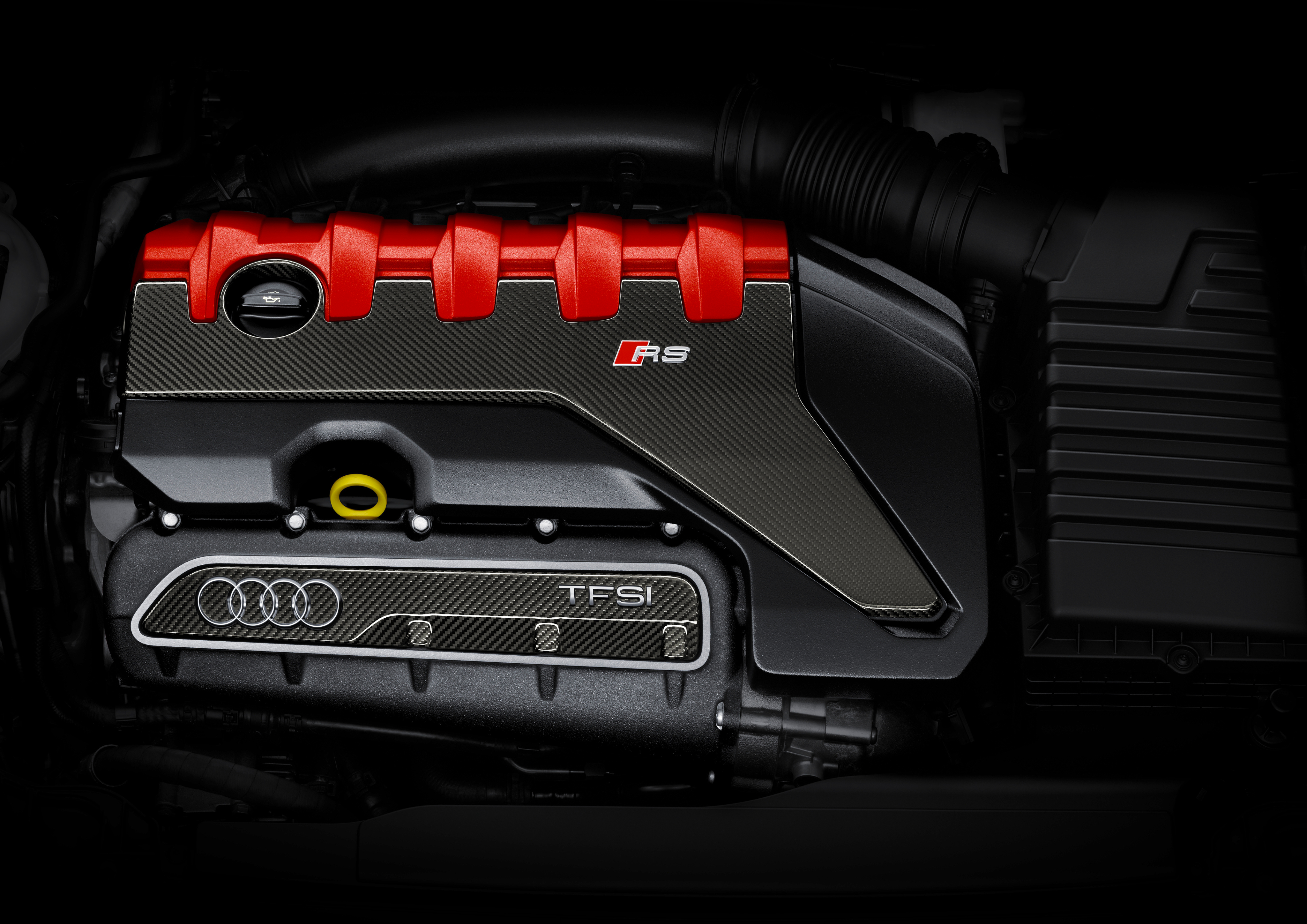
Today, the latest evolution of the EA855 evo powers the Audi RS 3 (8Y), the RS Q3 and the RS Q3 Sportback. With a specific output of more than 160 hp per litre of displacement, it ranks among the most powerful production five-cylinder engines in automotive history. Its distinctive firing order of 1-2-4-5-3 and odd number of cylinders continue to give it the unmistakable sound that has defined the Audi five-cylinder for the past 50 years.