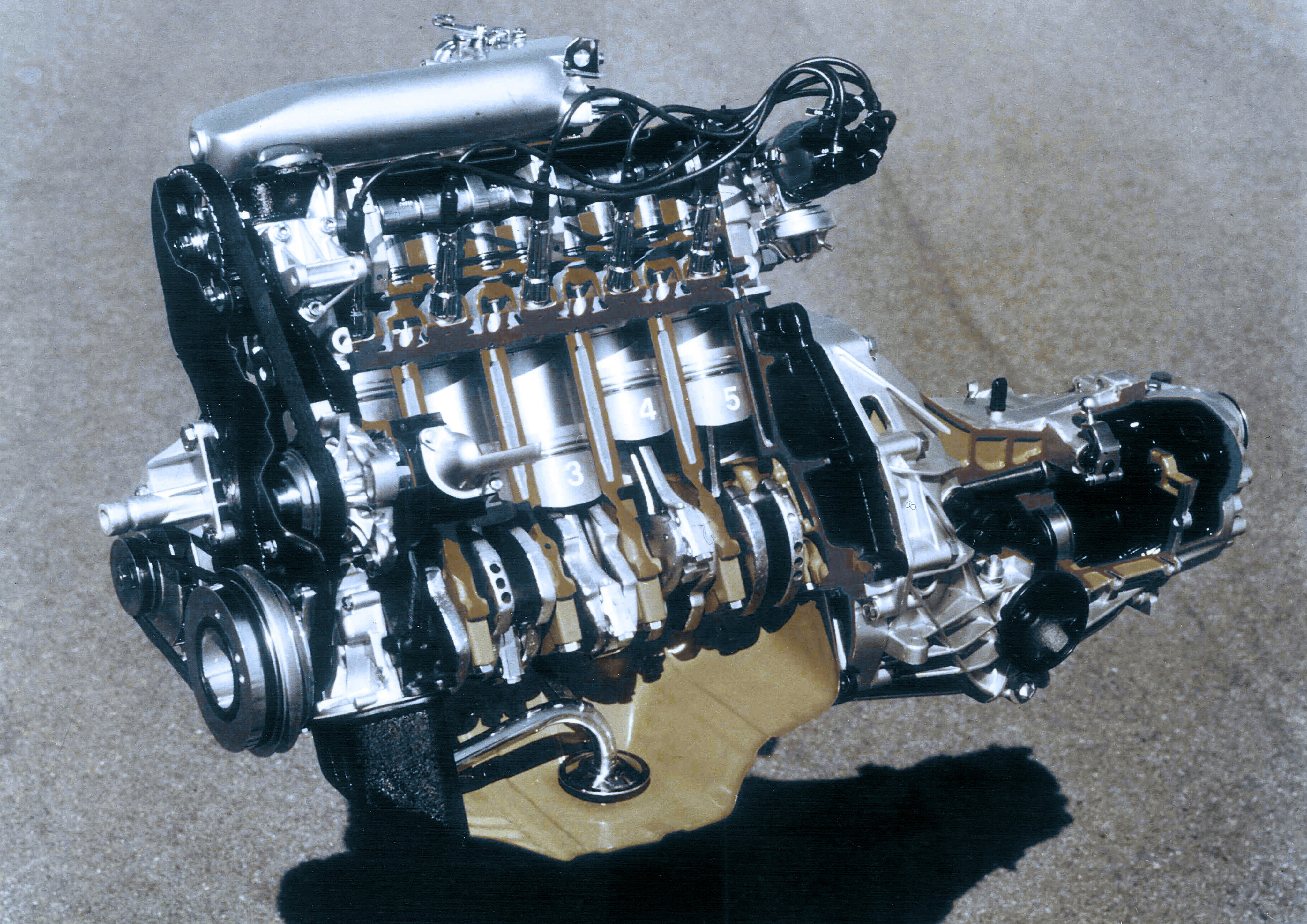
1976: first five-cylinder gasoline engine in the automotive industry
In August 1976, Audi introduces the second-generation Audi 100 (C2) in Luxembourg. For the first time, power is provided by a five-cylinder gasoline engine in a model from the brand with the four rings. The fuel-injected engine with a displacement of 2,144 cc develops 110 kW (136 hp) at 5,700 revolutions per minute. The maximum torque of 185 newton meters (136.45 lb-ft) is available at 4,200 rpm. The market launch of the Audi 100 (C2) follows in March 1977. From September 1979, the five-cylinder engine is also available in the Audi 200; from August 1982, it is fitted in the successor to the C2, the Audi 100 C3.
1978: five-cylinder carbureted engine
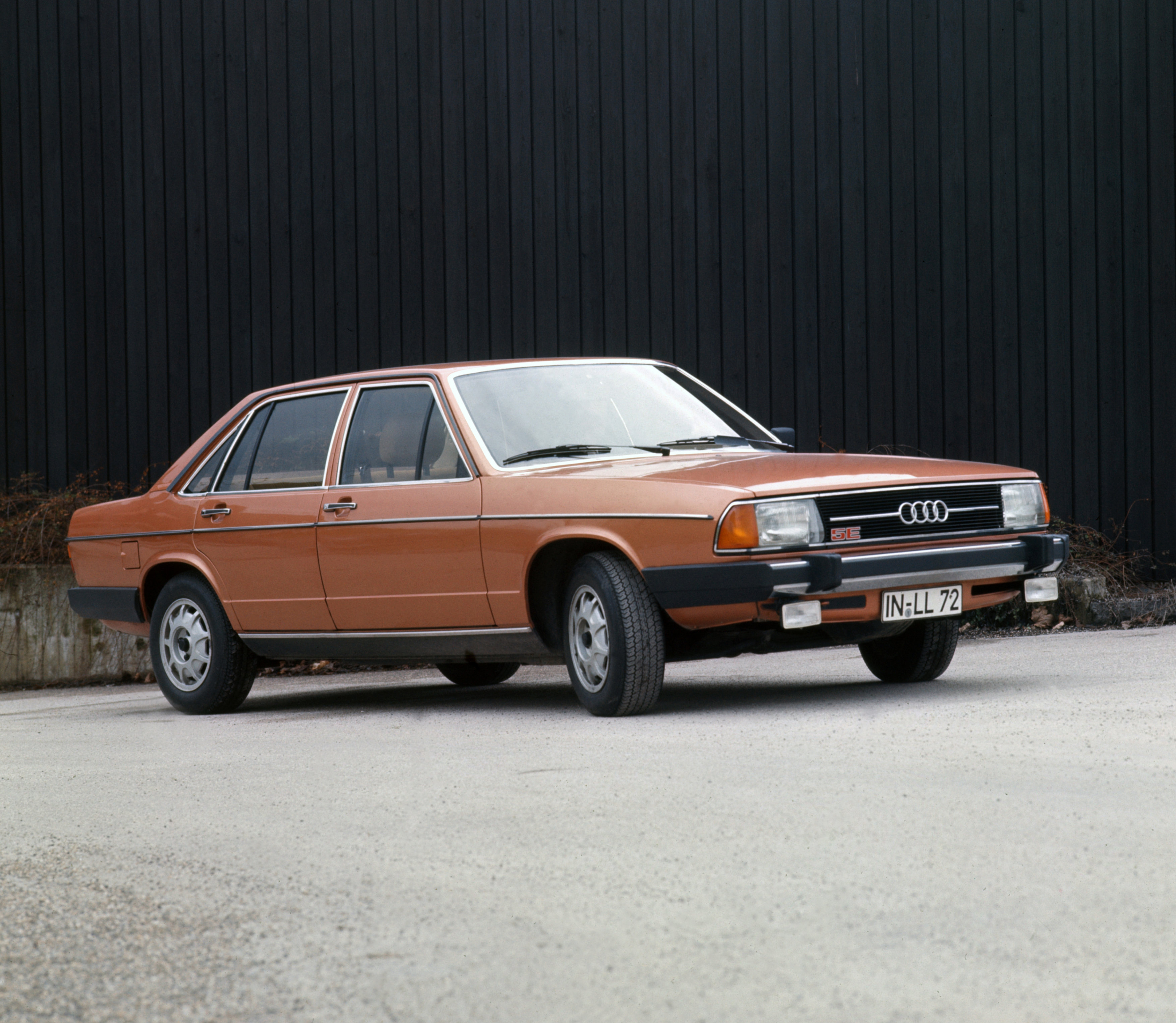
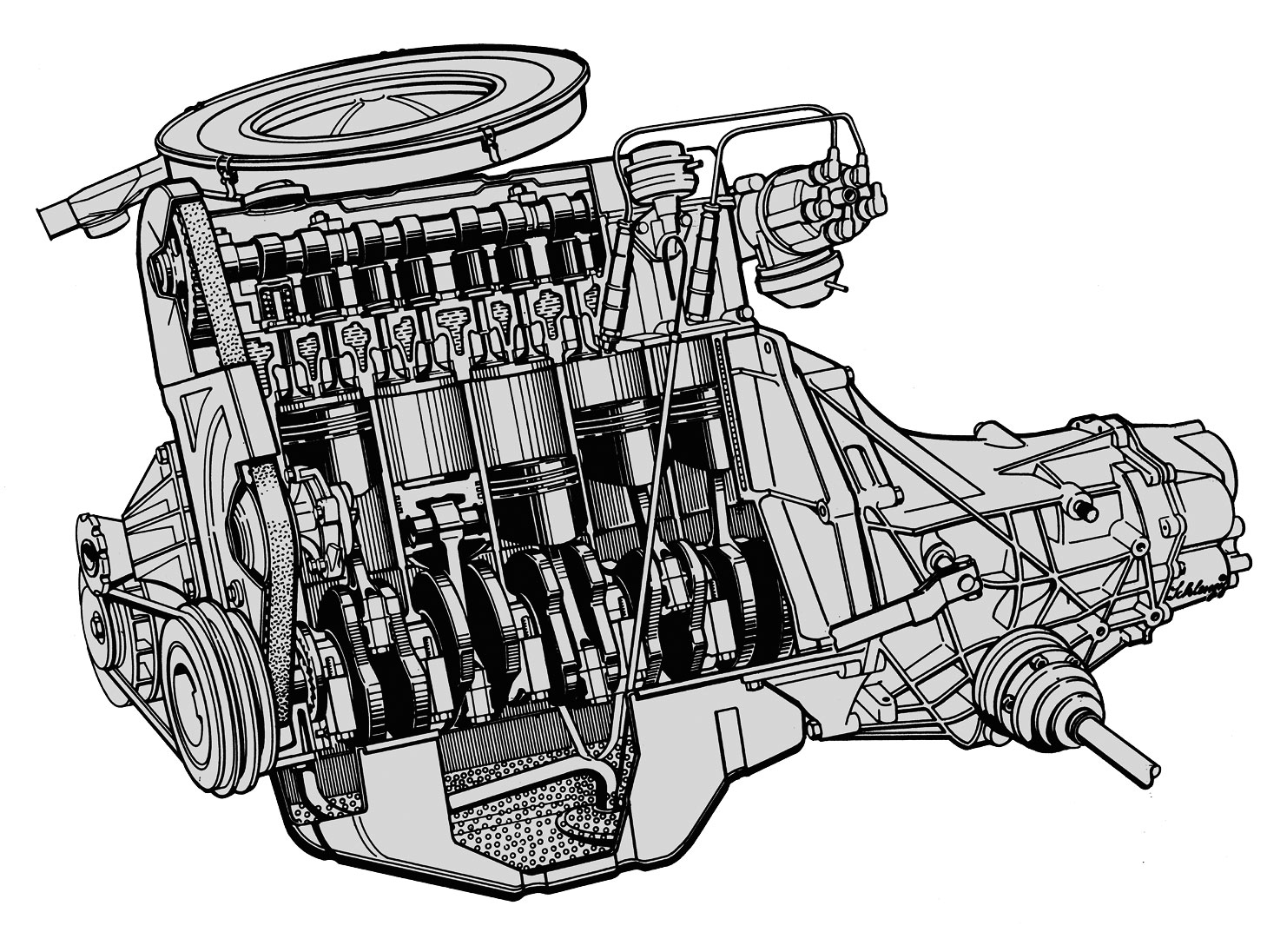
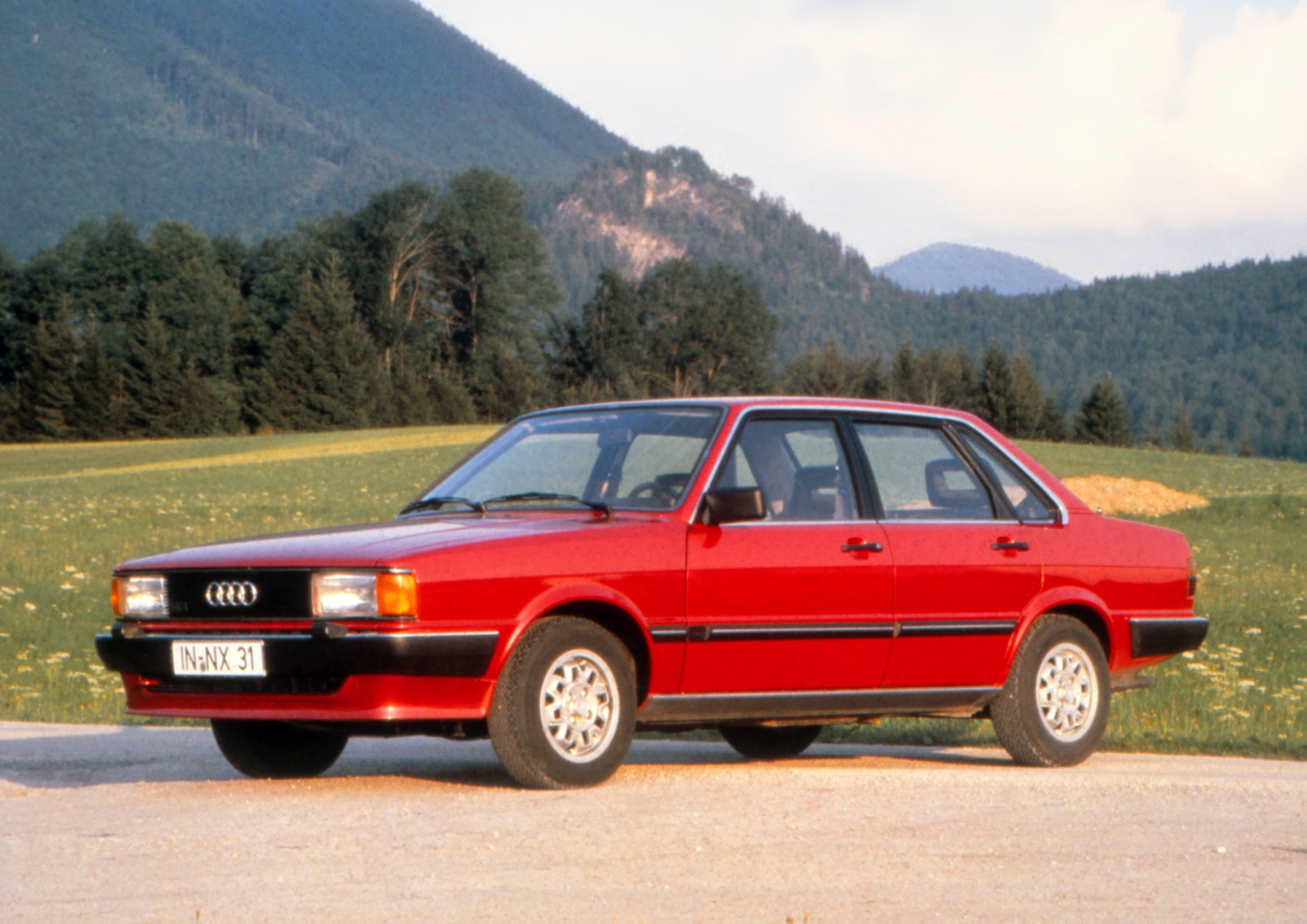
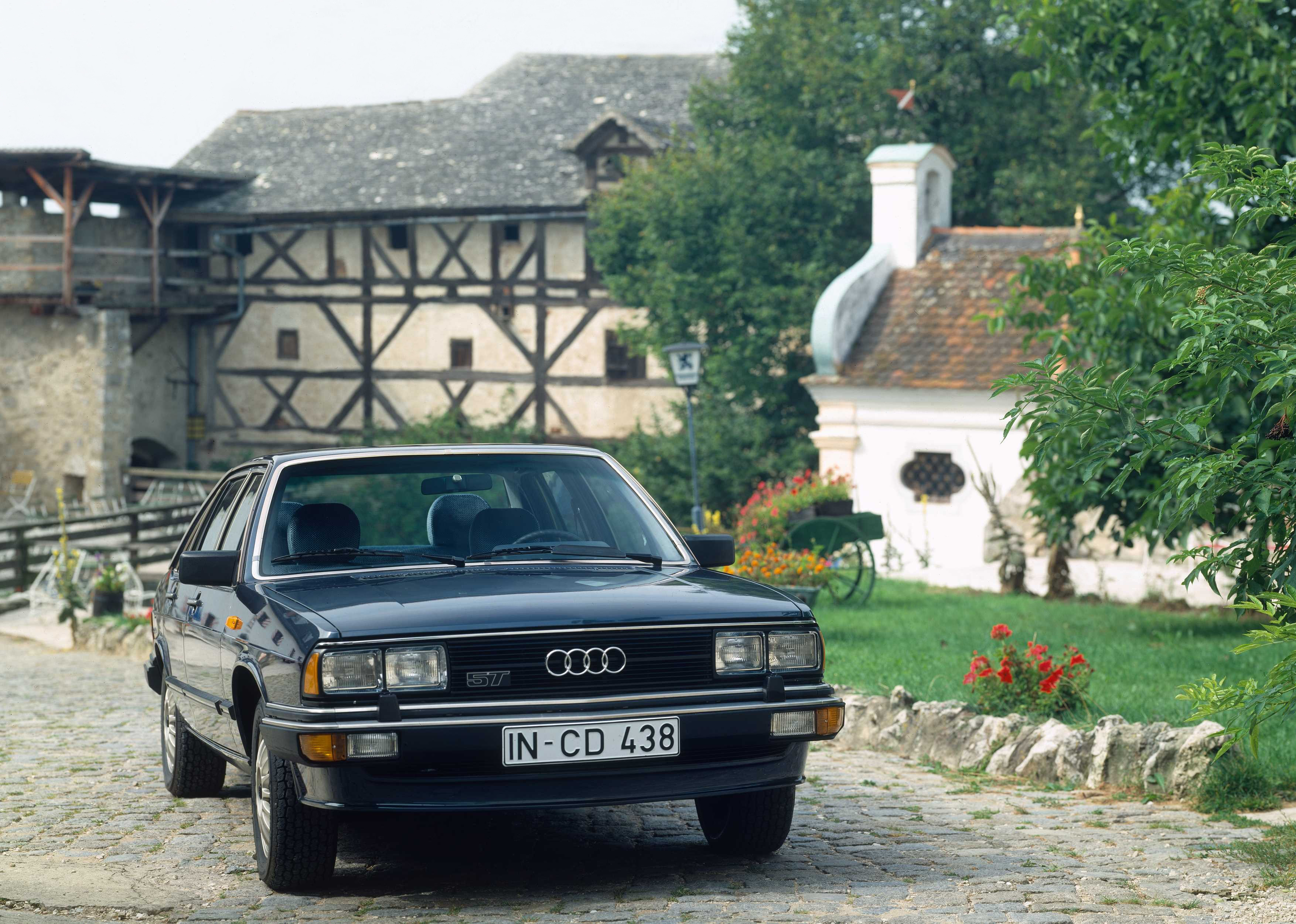
In April 1978, the five-cylinder carbureted version with an output of 85 kW (115 hp) replaces the basic twoliter four-cylinder version in the Audi 100 (C2). The new 1.9-liter unit produces maximum power at 5,400 revs and delivers 154 newton meters (113.58 lb-ft) of torque to the crankshaft at 3,700 rpm. The engine is used in the Audi 100 5S (C2), the Audi 80 CD (B2), the Audi Coupé GT 5S (B2) and in the Audi 100 (C3).
This picture: Audi 80 CD (B2), model year 1982
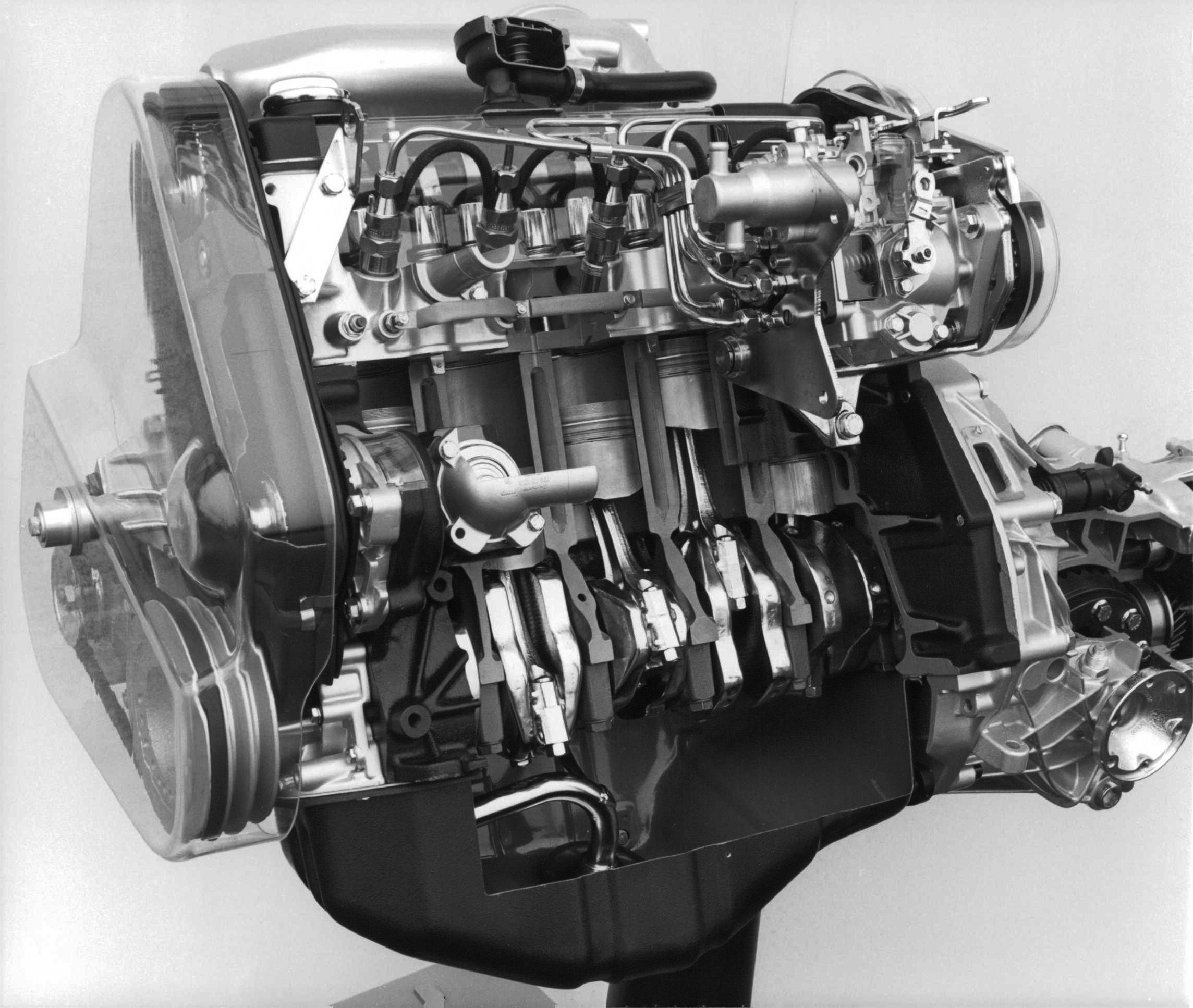
1978: first five-cylinder diesel
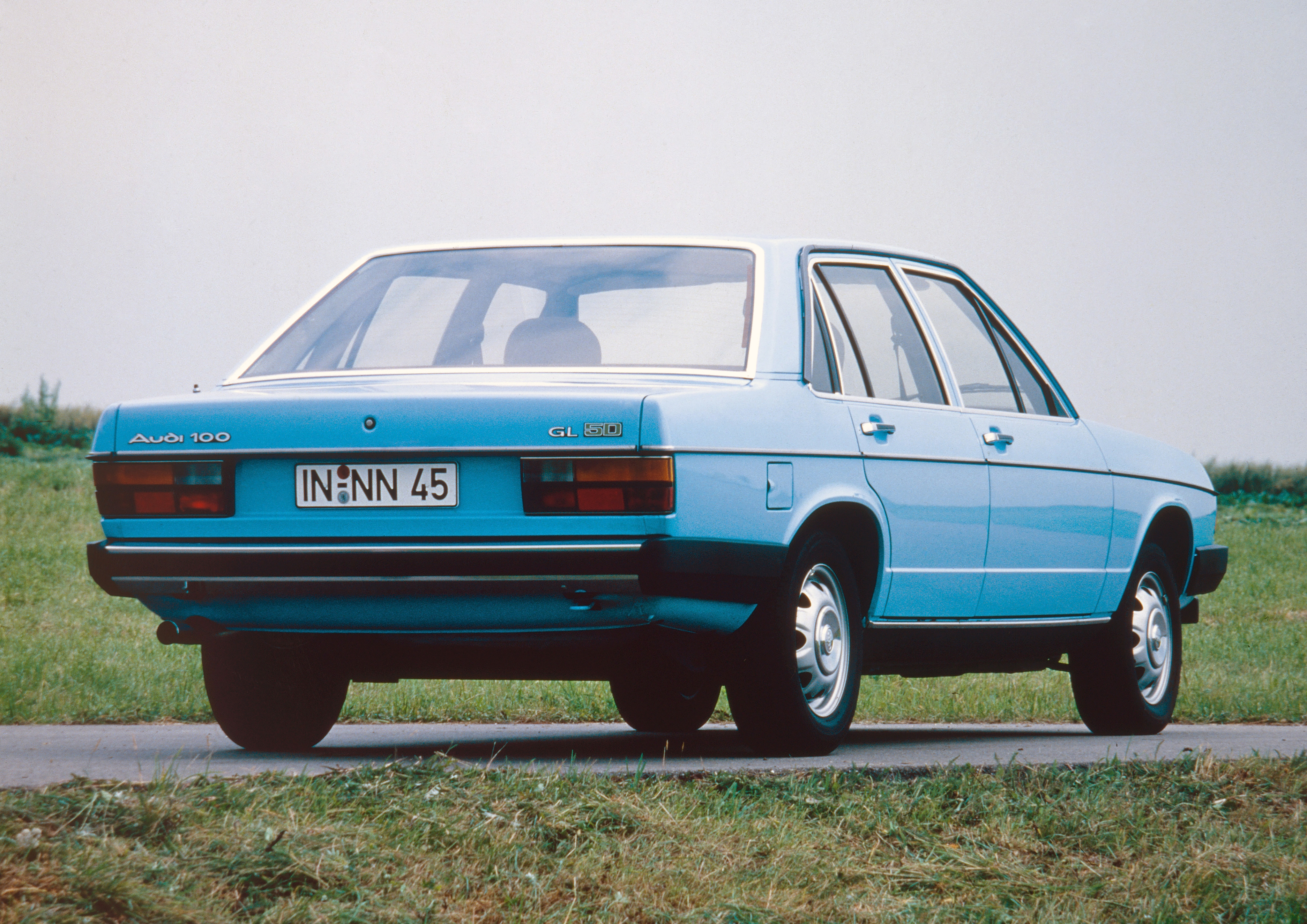
In 1978, Audi presents its first diesel model for the Audi 100 (C2). The five-cylinder naturally aspirated engine with a displacement of two liters develops 51 kW (70 hp) and 123 newton meters (90.72 lb-ft) of torque. It also powers the next-generation C3, propelling both the sedans and the Avant versions. From 1984, there is a turbocharged engine with an output of 64 kW (87 hp) and 172 newton meters (126.86 lb-ft) of torque.
This picture: Audi 100 GL 5D (C2), model year 1978
1980: five-cylinder gasoline engine with turbocharger
In 1980, the Audi 200 5T (C2) comes on to the market, which is powered by the first turbocharged gasoline engine from the brand with the four rings. From a displacement of 2,144 cc, the five-cylinder unit produces 125 kW (170 hp) at 5,300 revolutions per minute and 265 newton meters (195.45 lb-ft) of torque at 3,300 rpm. The Audi 200 5T (C2) is the first Audi in the luxury class and features the lavish equipment of the Audi 100 CD as standard.
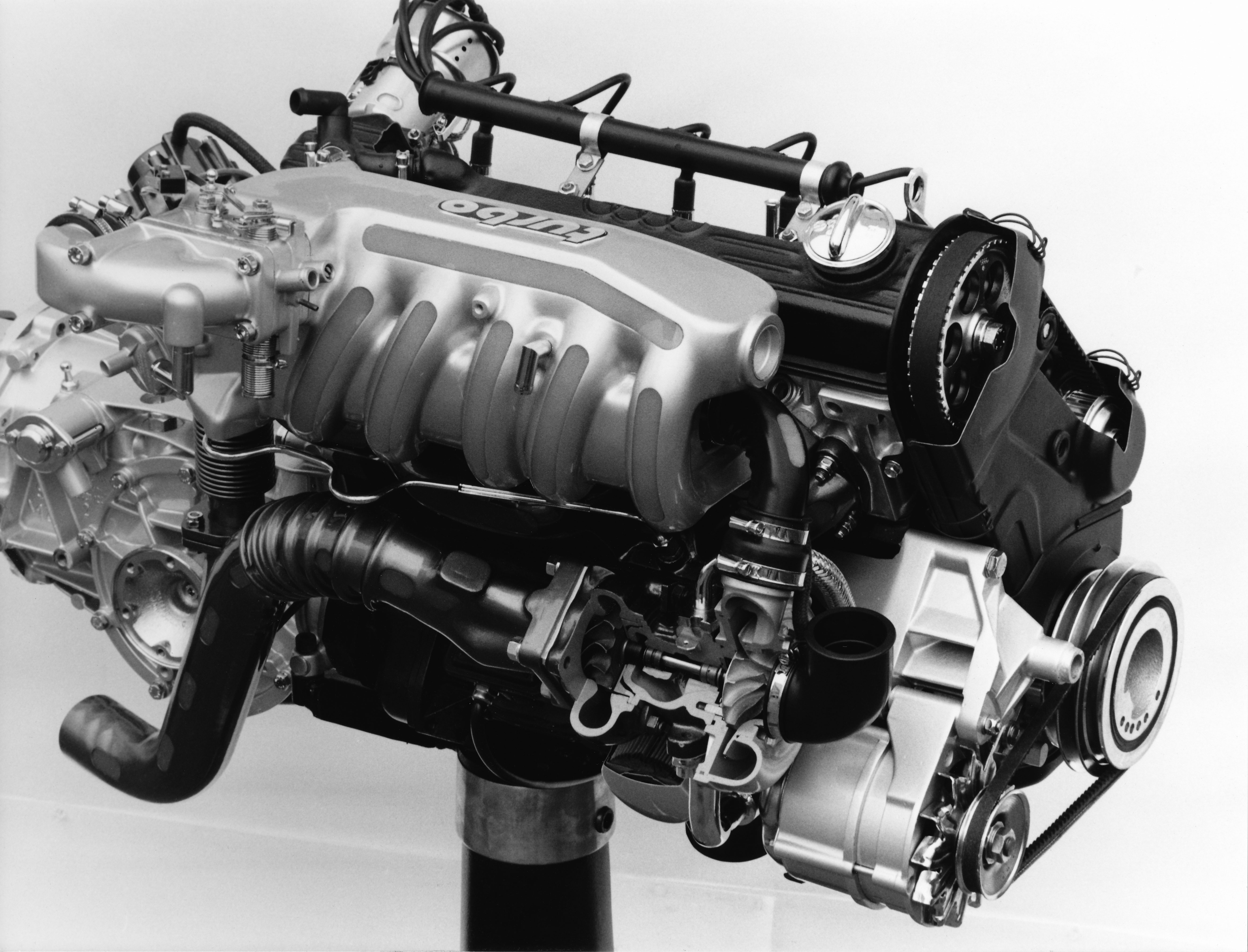
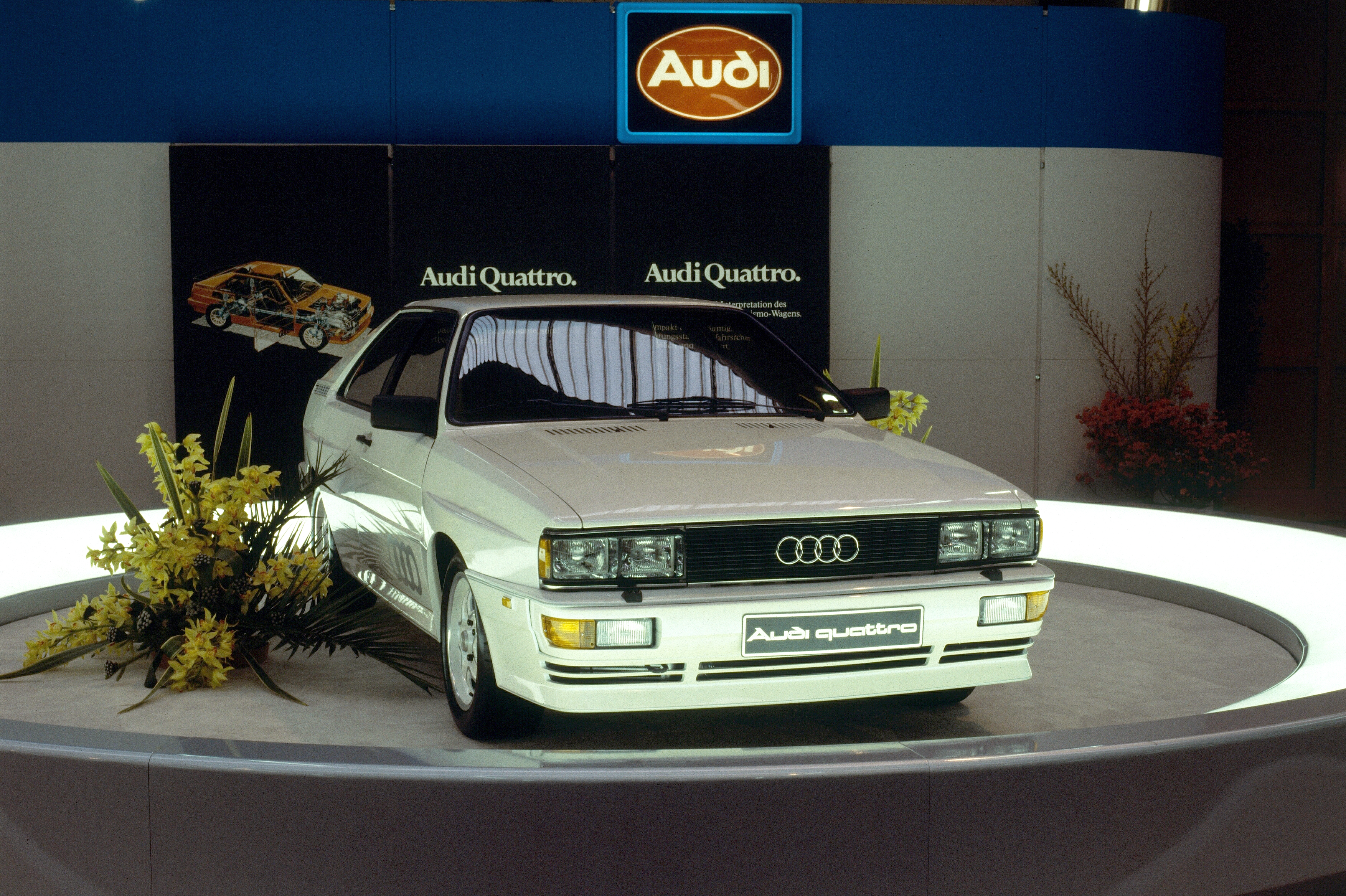
1980: five-cylinder gasoline engine with turbocharger and intercooler
In 1980 at the Geneva Motor Show, Audi unveils the Audi quattro (B2), known as the “Ur-quattro” from the mid-1990s. It uses the powerplant from the Audi 200 5T (C2), but features an intercooler. As a result, the turbocharged engine achieves a higher output of 147 kW (200 hp) at 5,500 revolutions per minute and 285 newton meters (210.21 lb-ft) of torque at 3,500 rpm. The body of the Audi quattro is based on the Audi Coupe (B2), which in turn is based on the Audi 80. Flared fenders, bulkier bumpers and sills as well as a larger rear spoiler distinguish the Audi quattro from the Coupe.
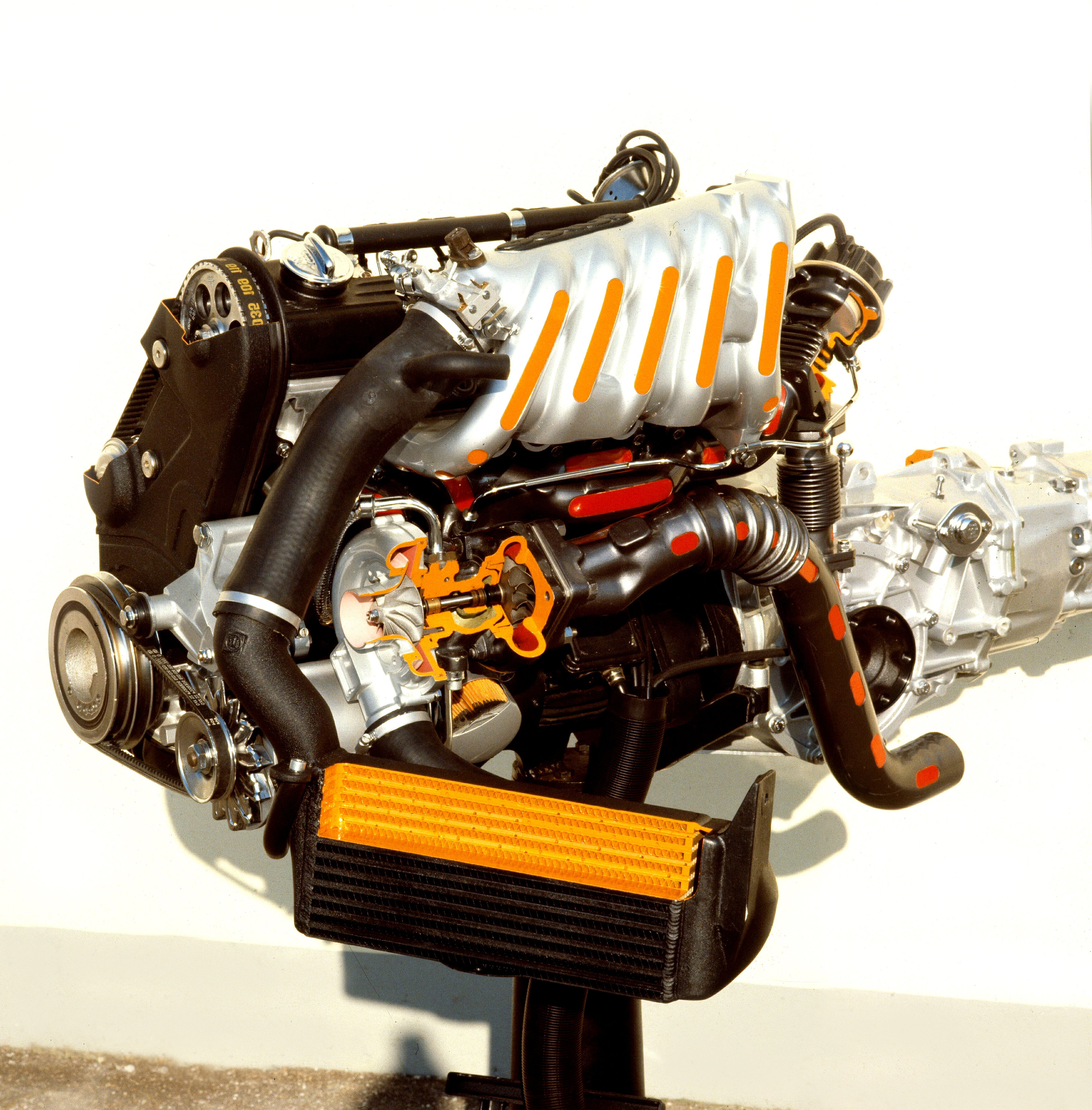
1983: five-cylinder gasoline engine with four-valve technology, turbocharger and intercooler
In September 1983, Audi presents the Audi Sport quattro (B2) at the International Motor Show in Frankfurt am Main. It is powered by a 2.1-liter highperformance engine with four-valve technology that produces 225 kW (306 hp) at 6,700 revolutions per minute. The maximum torque of 350 newton meters (258.15 lb-ft) is available at 3,700 rpm. Delivery commences in May 1984. The Audi Sport quattro (B2) is a special series limited to 214 vehicles, produced to meet homologation requirements for rallying. The rules stipulate that displacement must be limited to a maximum of 2,133 cc.
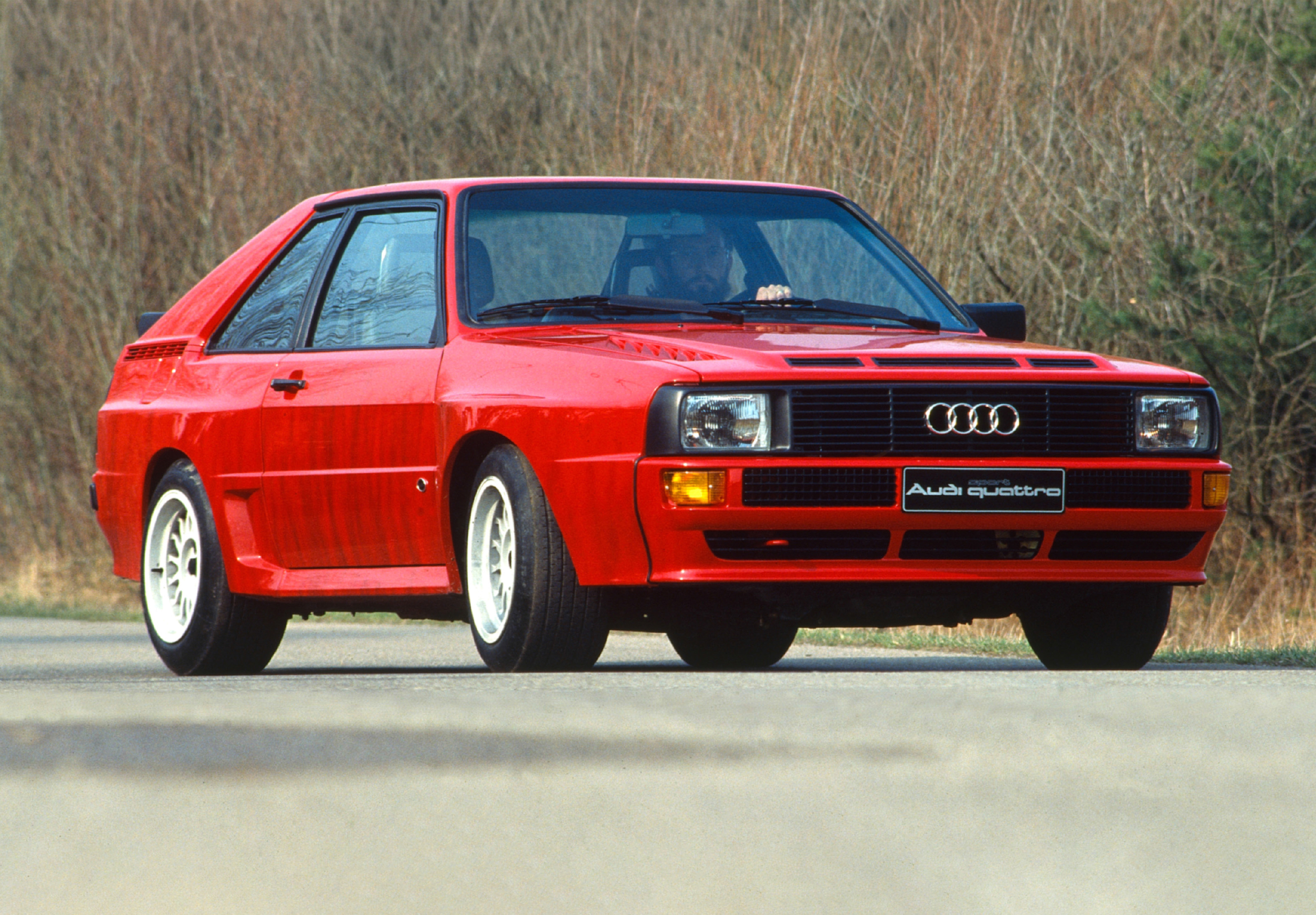
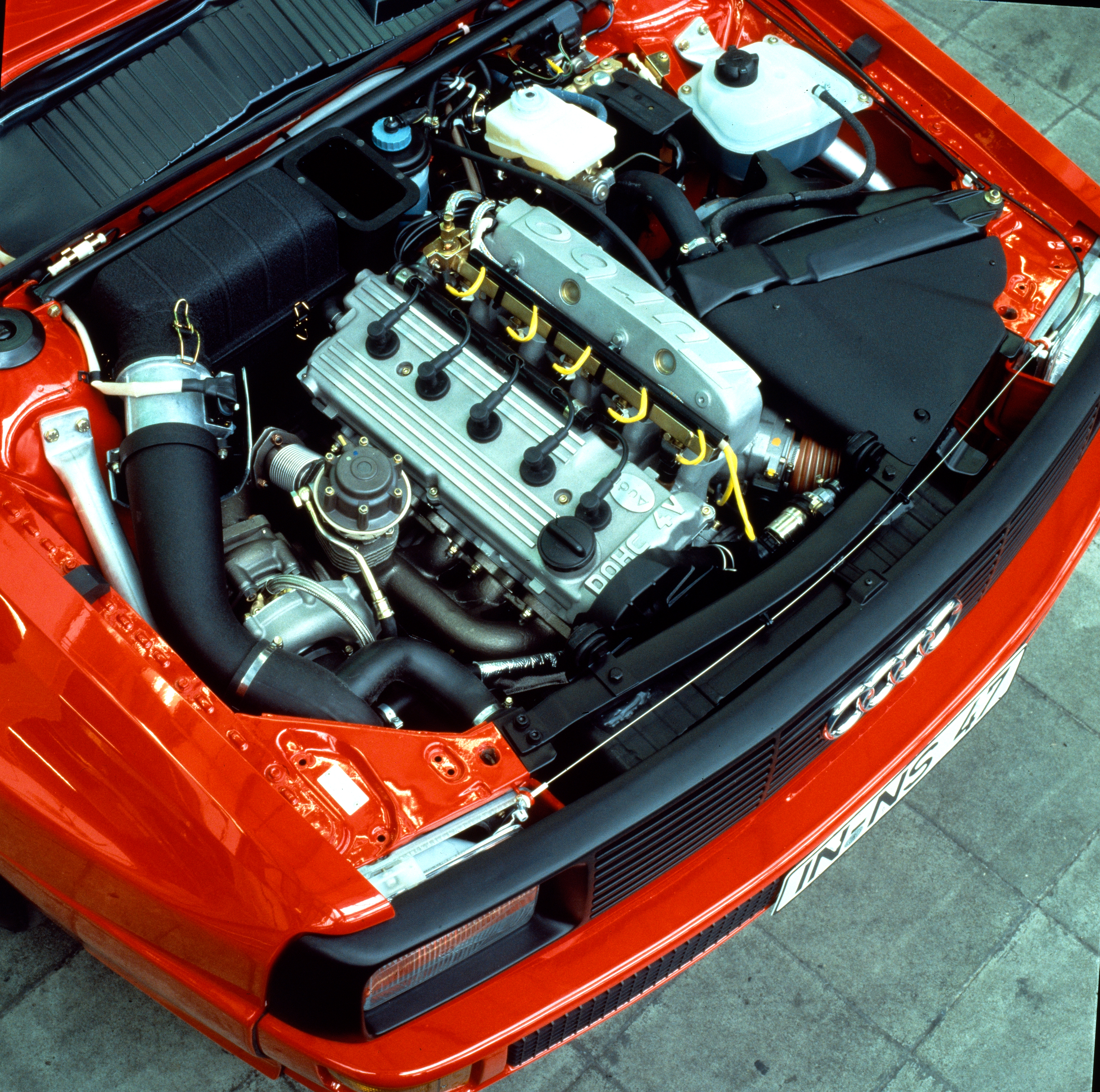
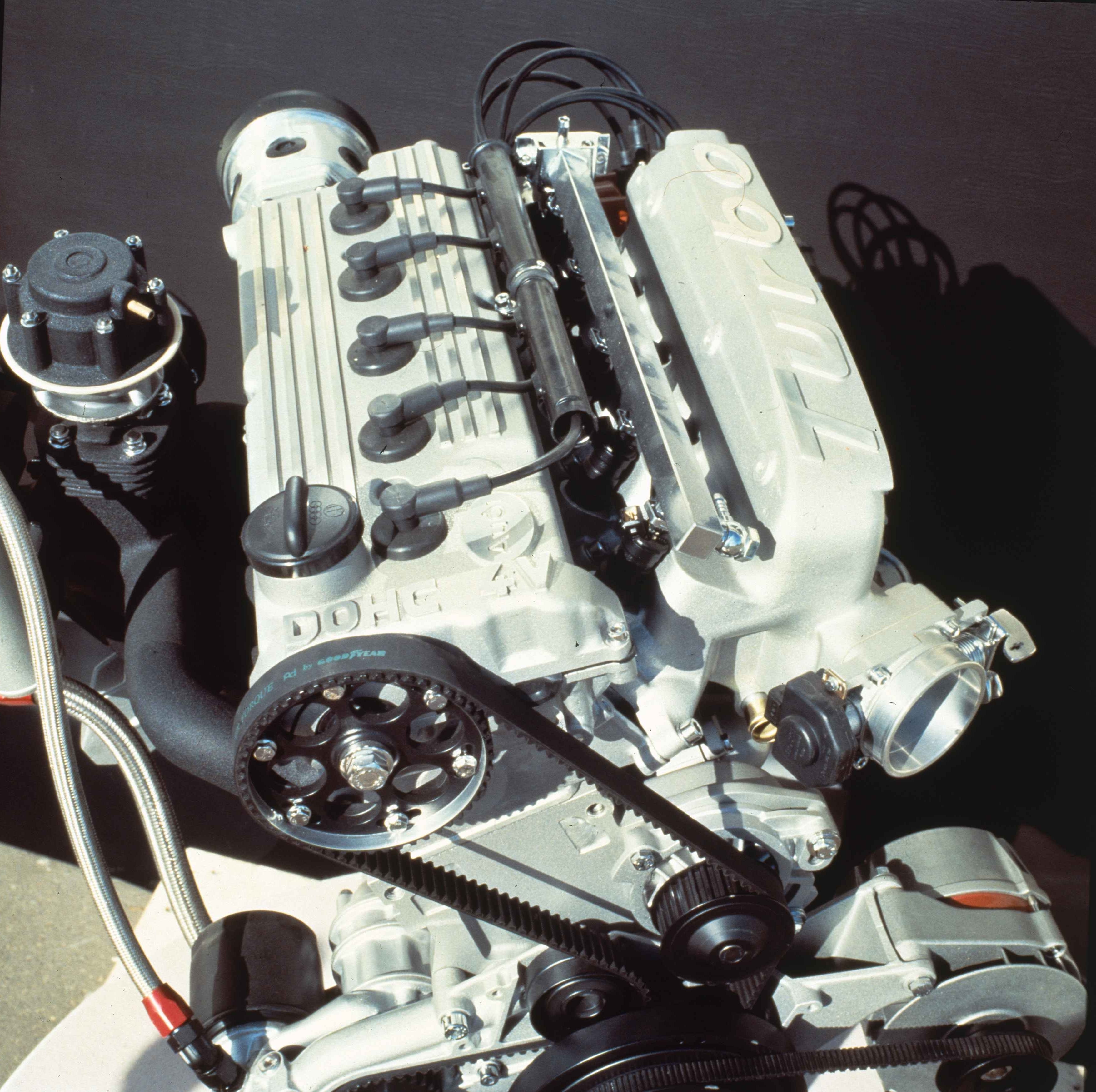
1984: map-controlled five-cylinder gasoline engine with emissions control as standard
In 1984, a completely new development appears. Audi is the first manufacturer to optimize the five-cylinder engine with a fully electronic map-controlled ignition system and a catalytic converter as standard. From 2,309 cc, it produces 100 kW (136 hp) at 5,600 rpm and 188 newton meters (138.66 lb-ft) of torque at 3,500 revolutions per minute. The most widely used five-cylinder engine from Audi is found in the Audi 100 2.3E (C3), the Audi Coupe 2.3E (B3) and in the Audi 90 2.3 E (B3). From 1990, it also powers the Audi 100 2.3E (C4) and a year later the Audi 80 2.3E (B4) and the Audi Cabriolet 2.3E. Here, it delivers 98 kW (133 hp) at 5,600 revolutions per minute and 186 newton meters (137.19 lb-ft) at 4,000 rpm.
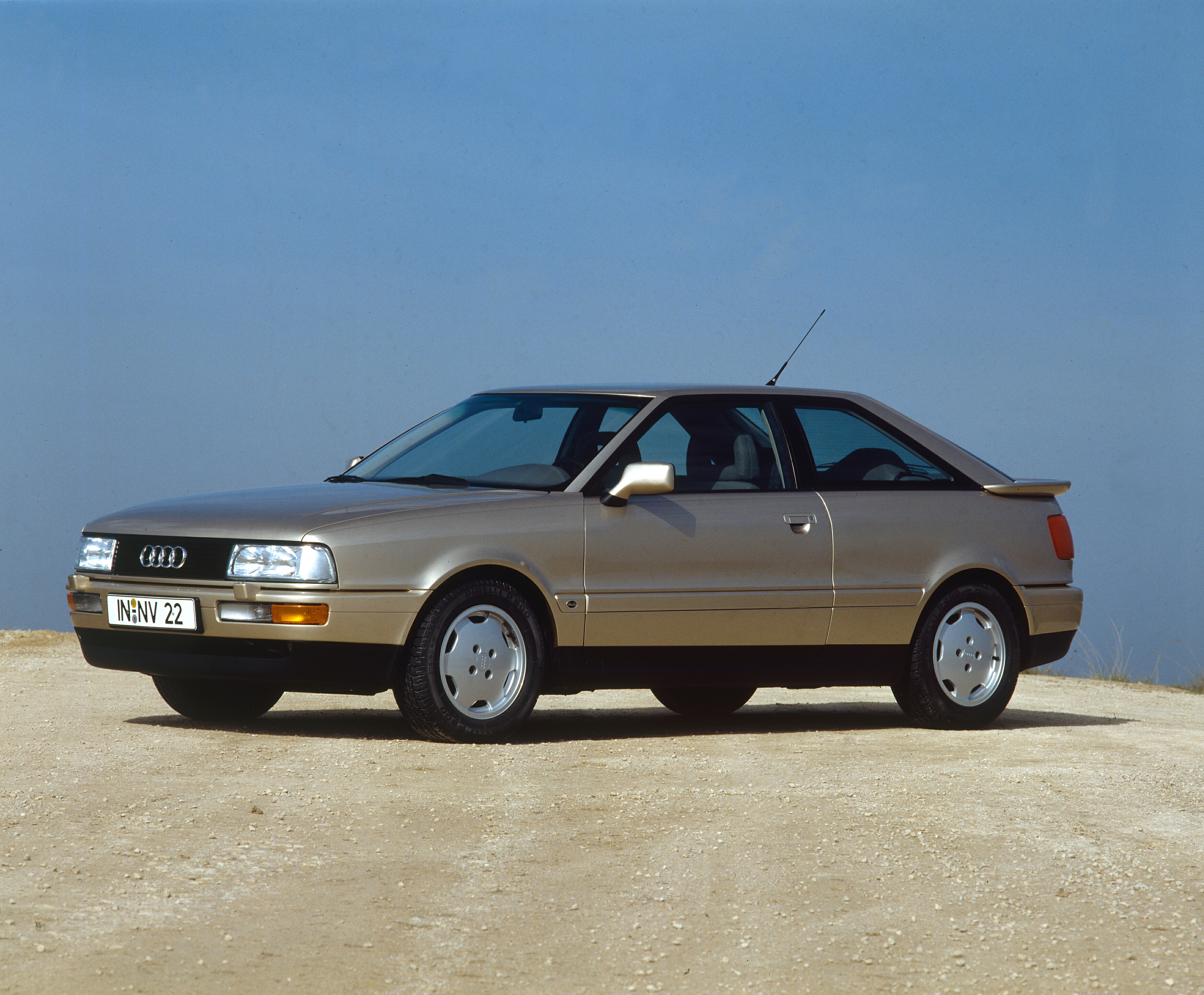
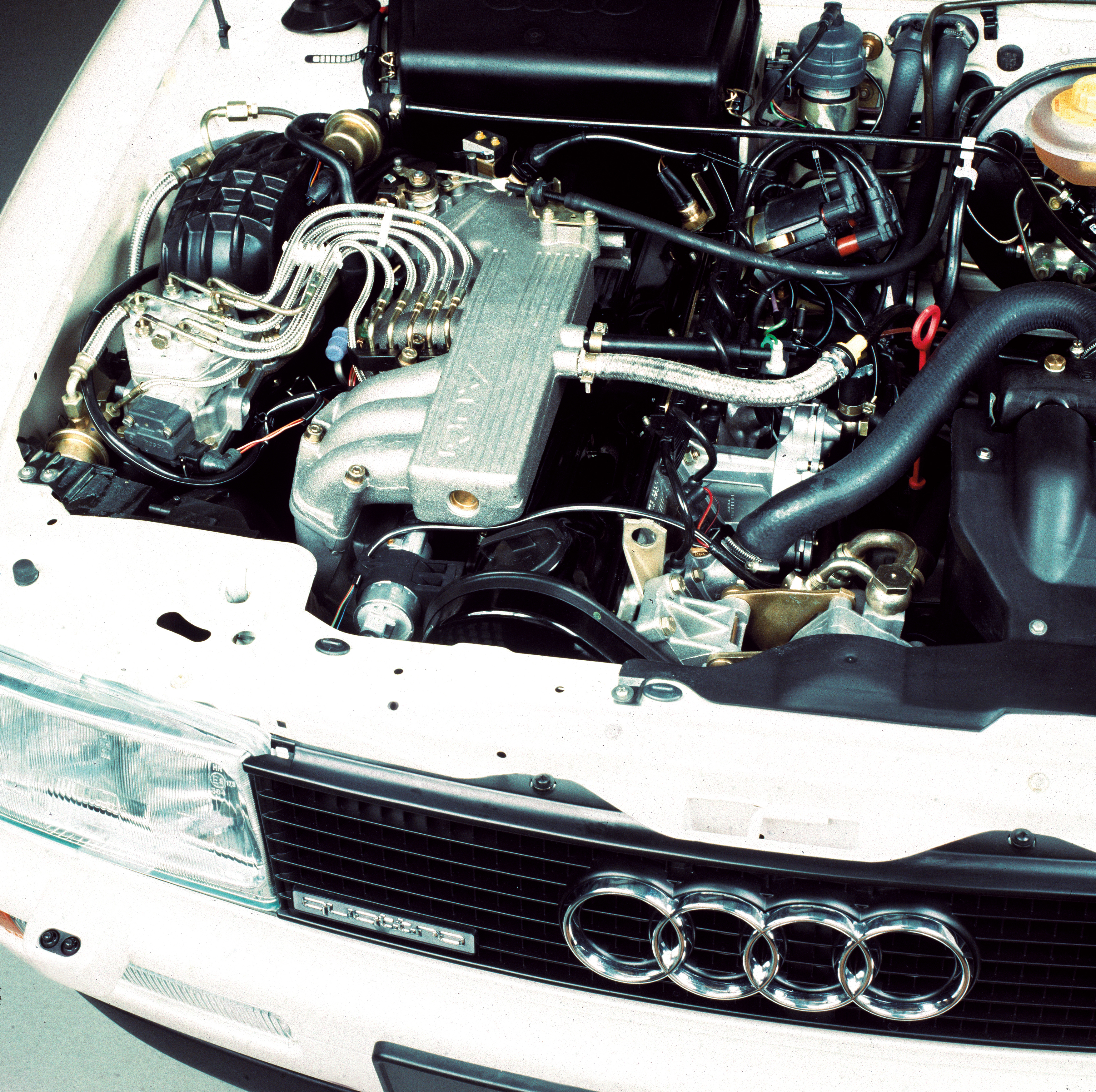
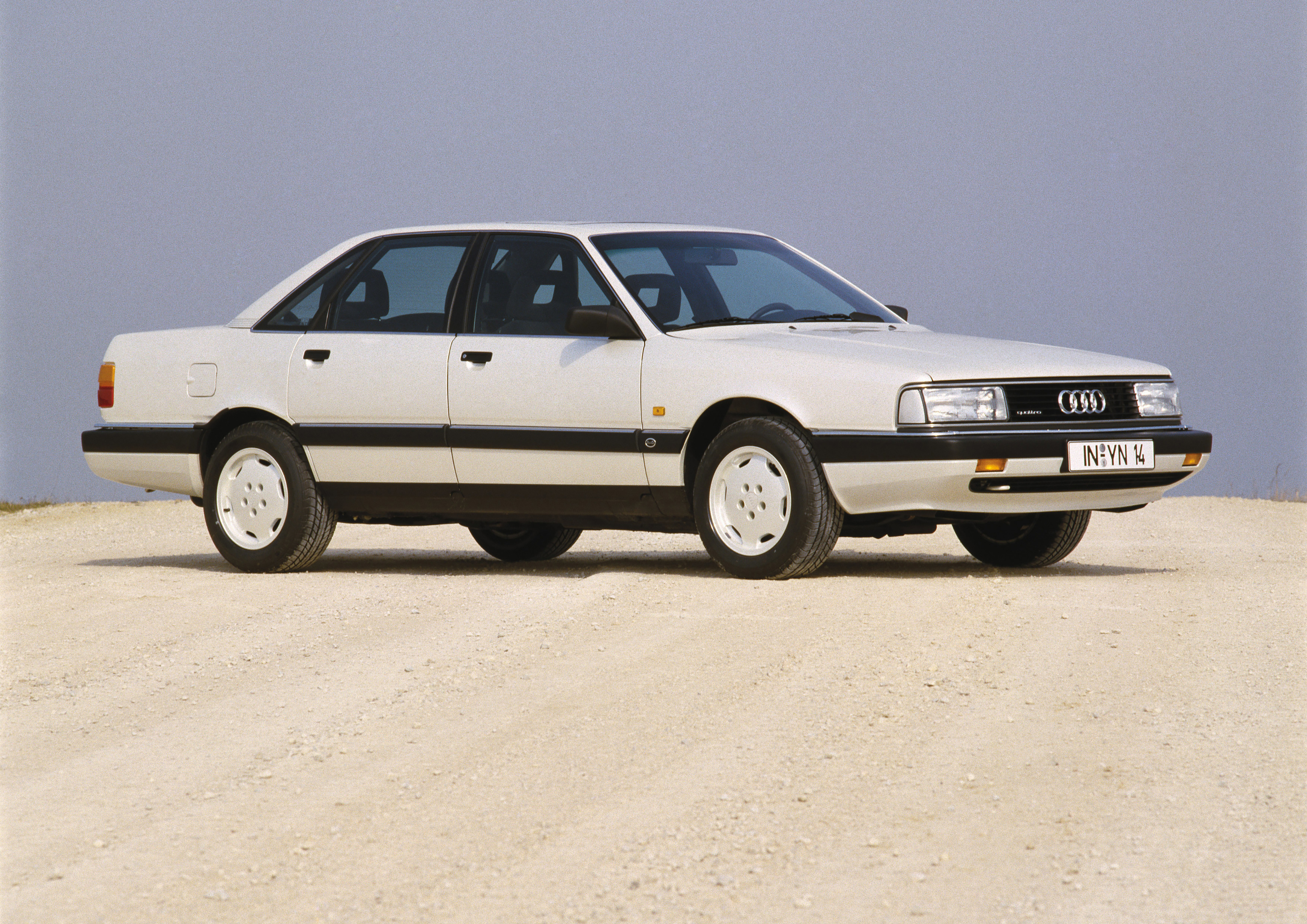
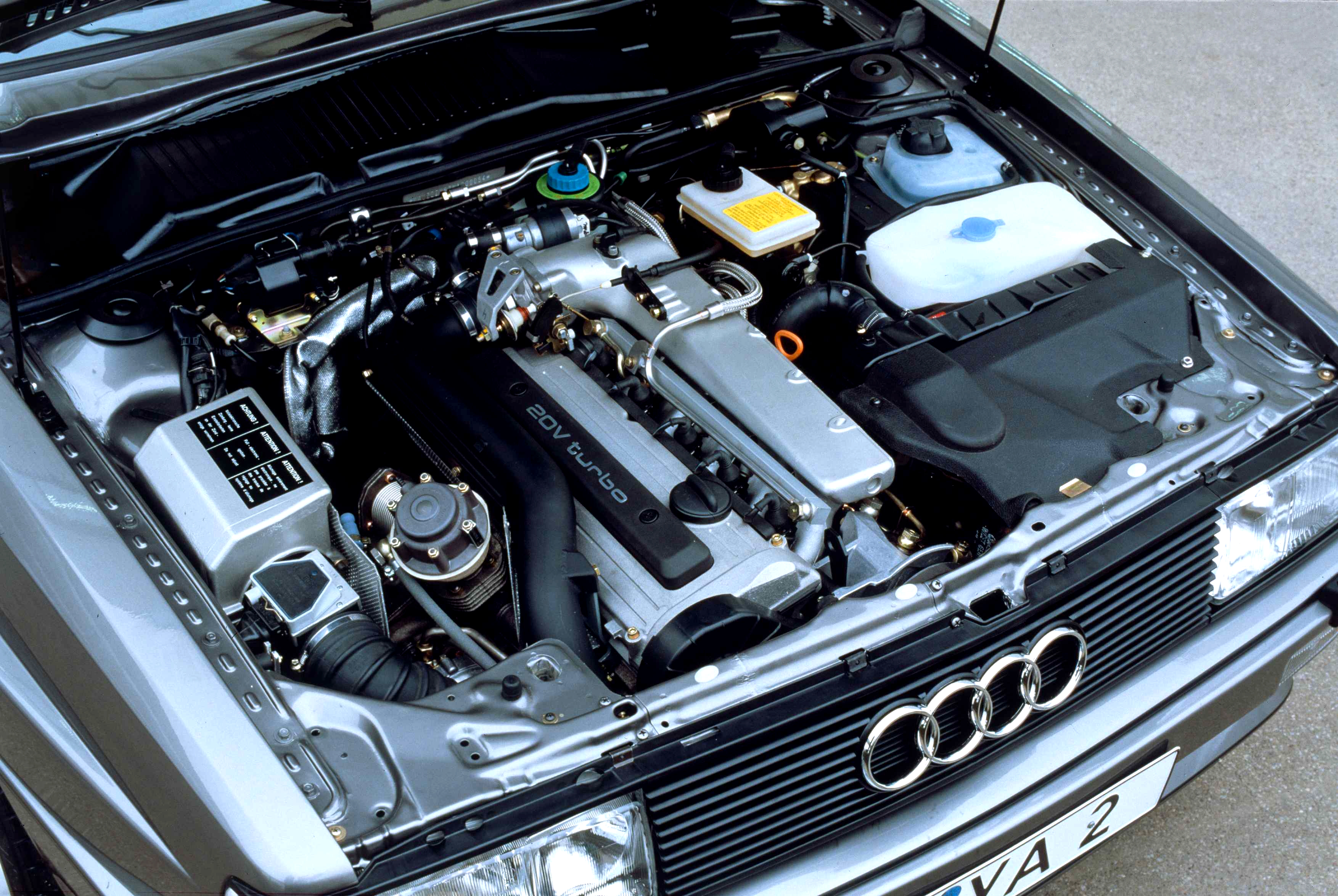
1988: five-cylinder gasoline engine with four-valve technology, turbocharger and catalytic converter (S engine)
With two catalytic converters, four-valve technology, a closed tank venting system and a diagnostic system, this powerplant offers a very high standard of emissions control and technology. It is first available in the Audi 200 quattro 20V (C3), then in the Audi quattro 20V (B2) a year later and in the Audi S2 Coupe (B3) in 1990. The five-cylinder turbocharged engine has a displacement of 2,226 cc and delivers 162 kW (220 hp) at 5,700 revolutions per minute and 309 newton meters (227.91 lb-ft) of torque at 1,950 rpm.
1989: first five-cylinder turbocharged direct-injection diesel engine in a production car
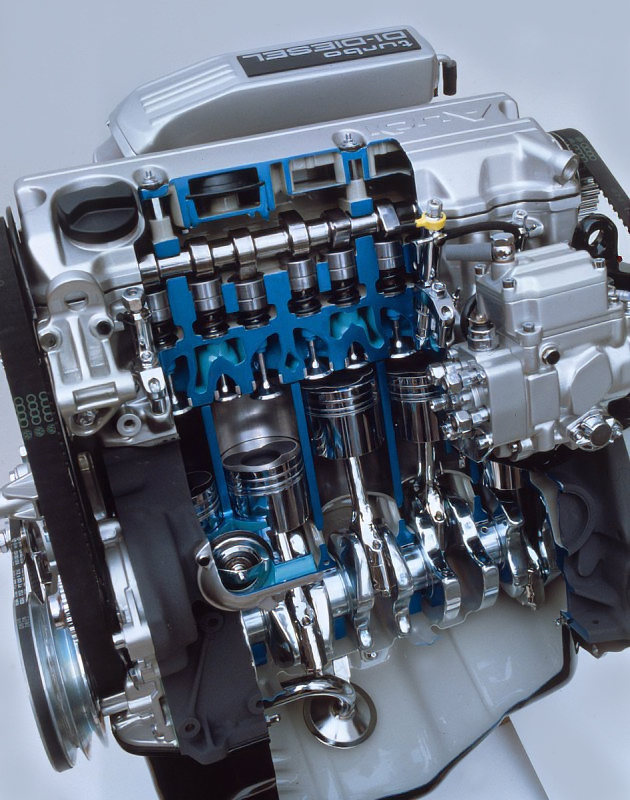
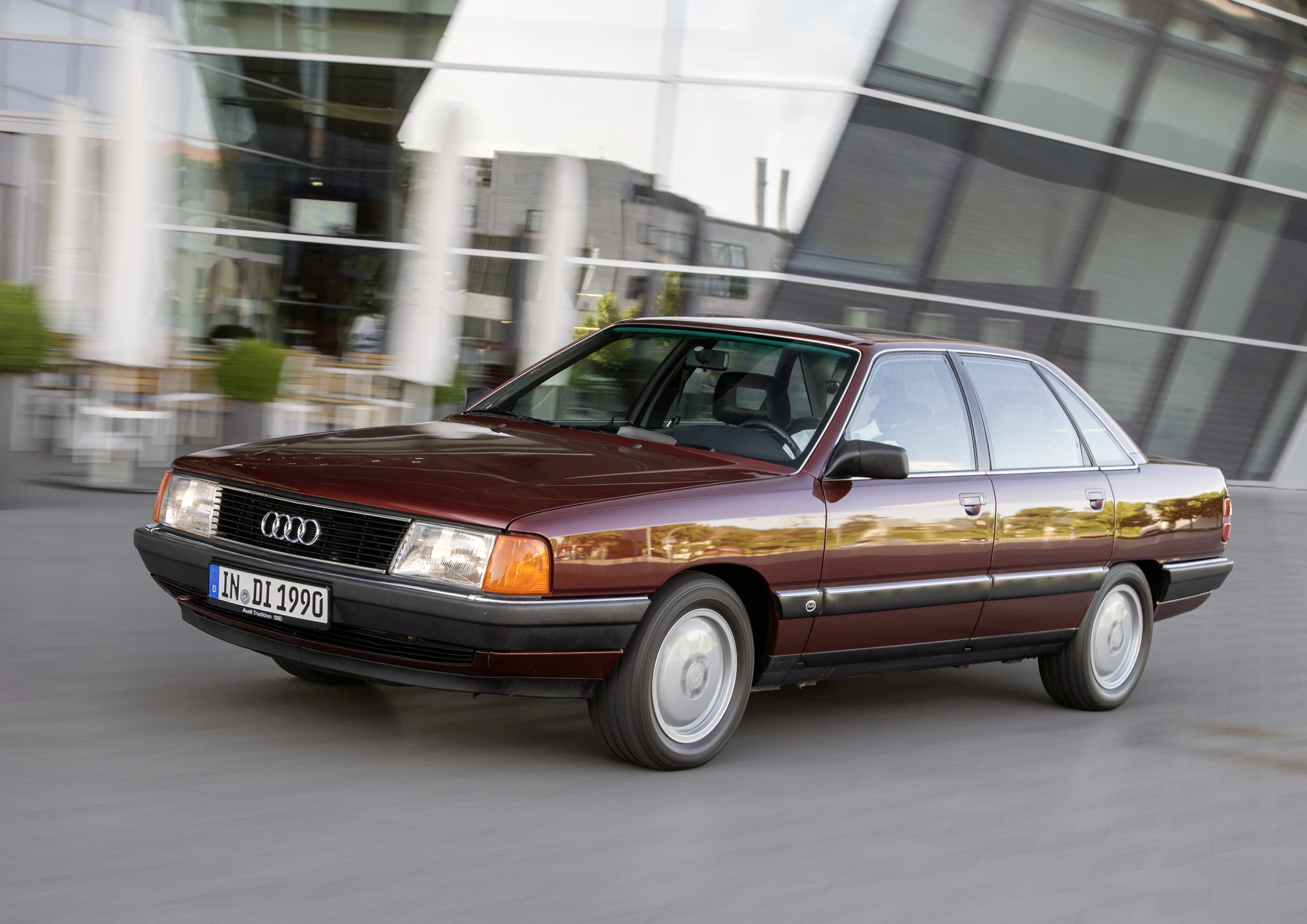
Audi presents another milestone in the automotive history in 1989 at the International Motor Show in Frankfurt am Main: the Audi 100 TDI. The first fivecylinder turbocharged diesel with direct injection for a production car produces 88 kW (120 hp) from a displacement of 2.5 liters and delivers 265 newton meters (195.45 lb-ft) of torque to the crankshaft. It is used in the C3 and in the C4 – from 1994 with an output of 103 kW (140 hp) and 290 newton meters (213.89 lb-ft) of torque.
1991: performance-enhanced five-cylinder S engine with overboost control
In the 1991 Audi S4, the Sport version of the Audi 100 (C4), a turbocharged 2.2-liter 20-valve five-cylinder inline engine is at work. It develops 169 kW (230 hp) at 5,900 rpm. Thanks to a brief increase in boost pressure, a peak torque of 350 newton meters (258.15) is achieved at 1,950 revolutions per minute. The engine also powers the Audi S2 Avant (B4) and the Audi S2 Coupé (B3). In 1994, the Audi S4 becomes known as the Audi S6.
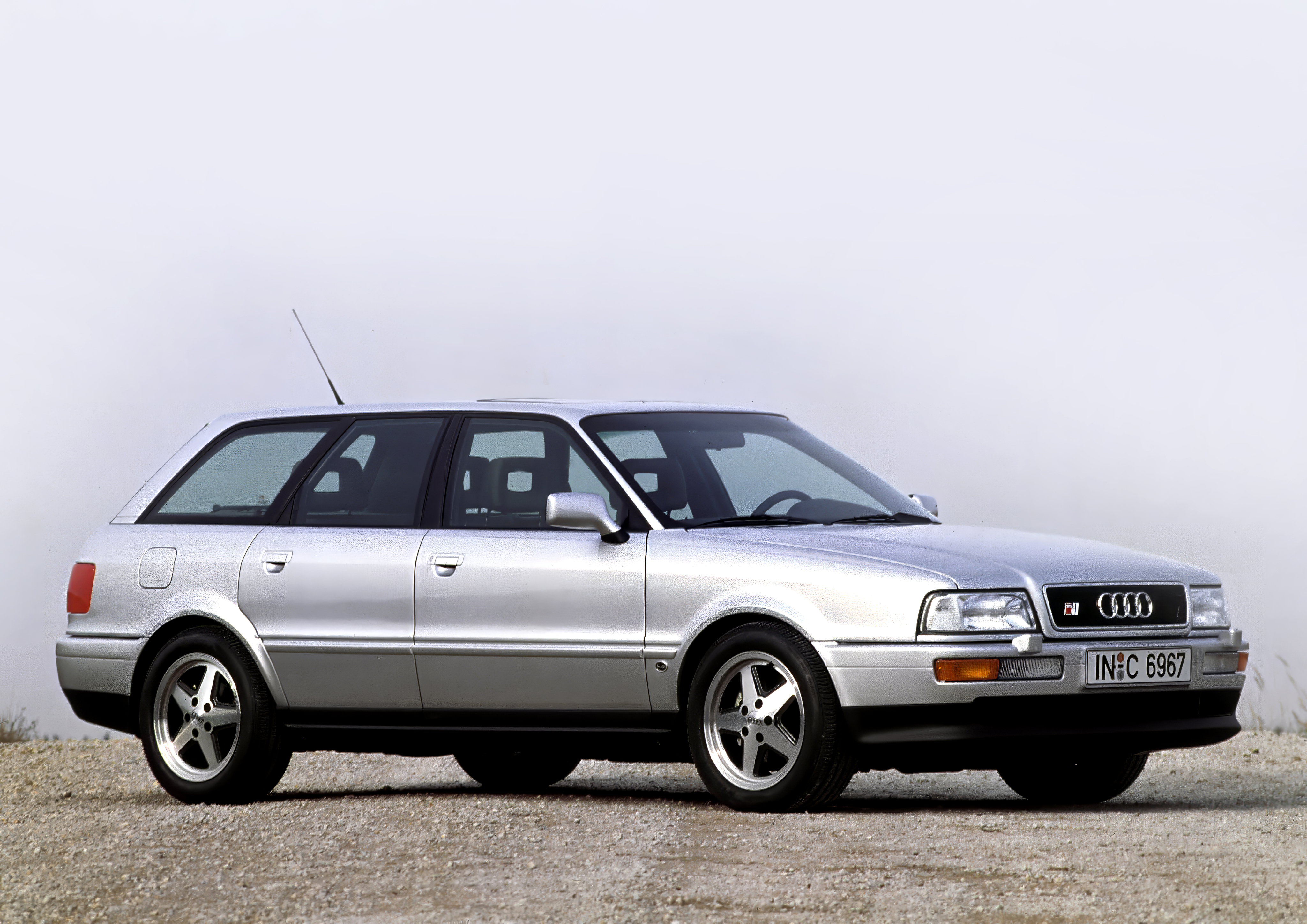
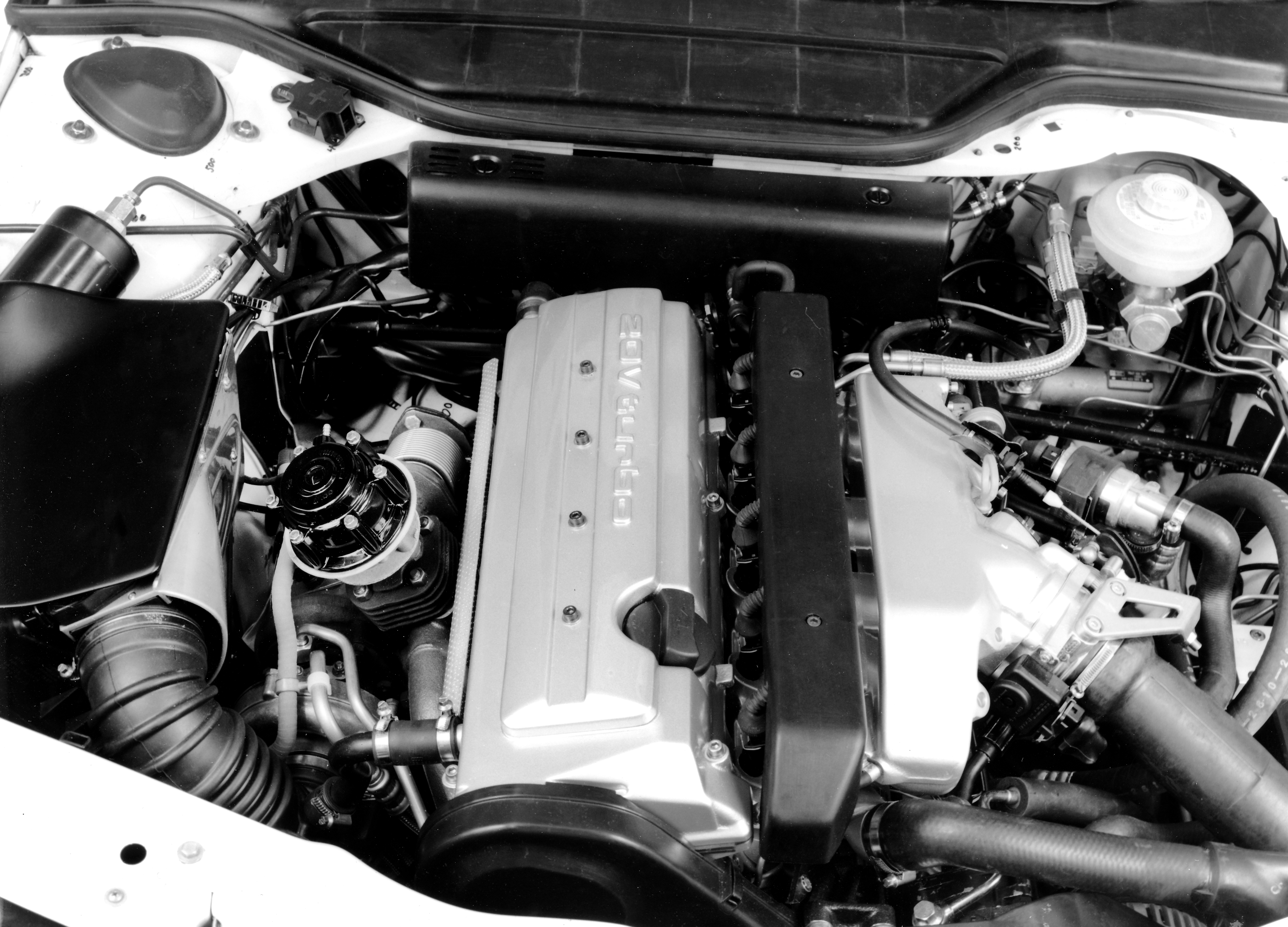
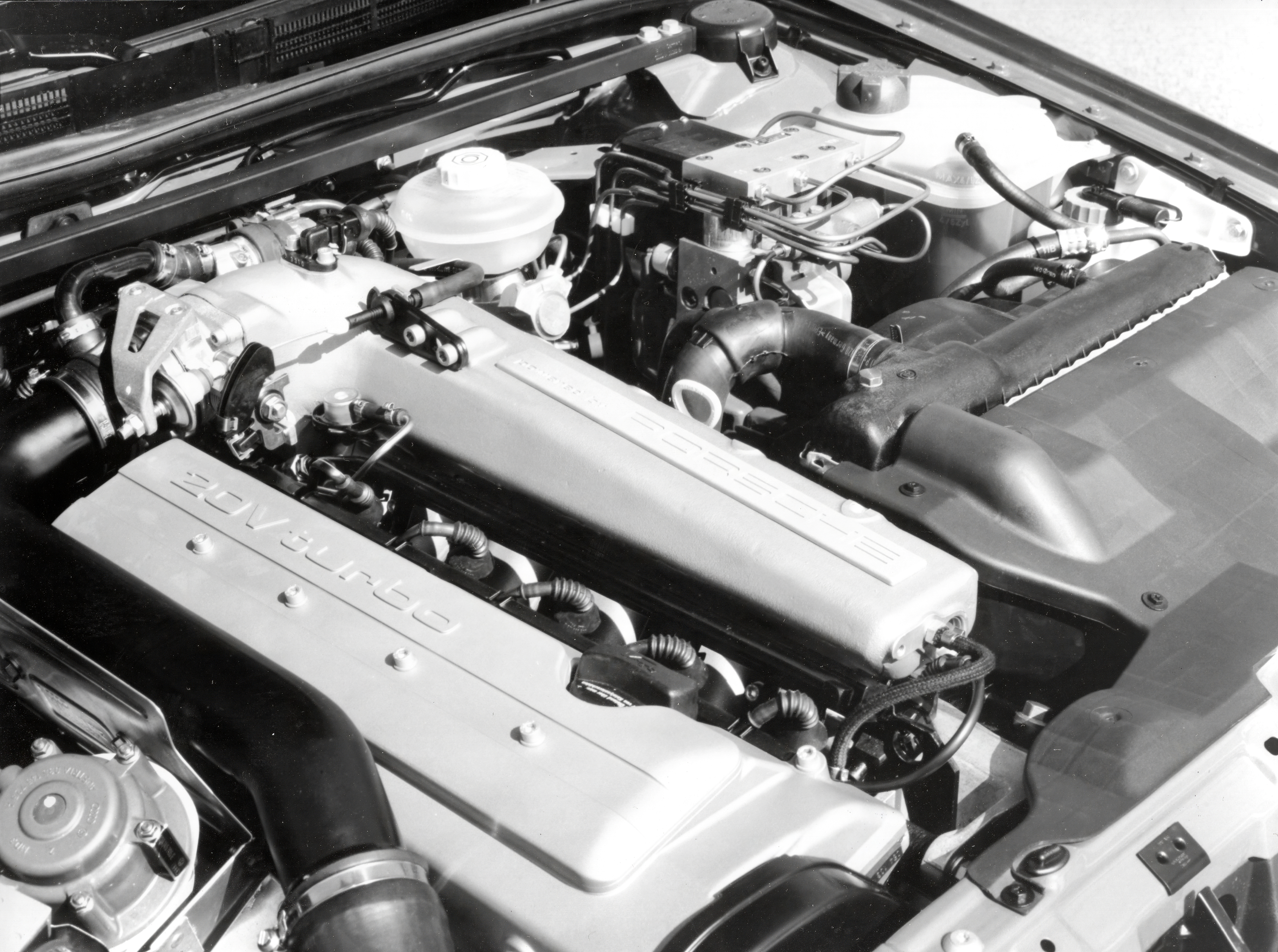
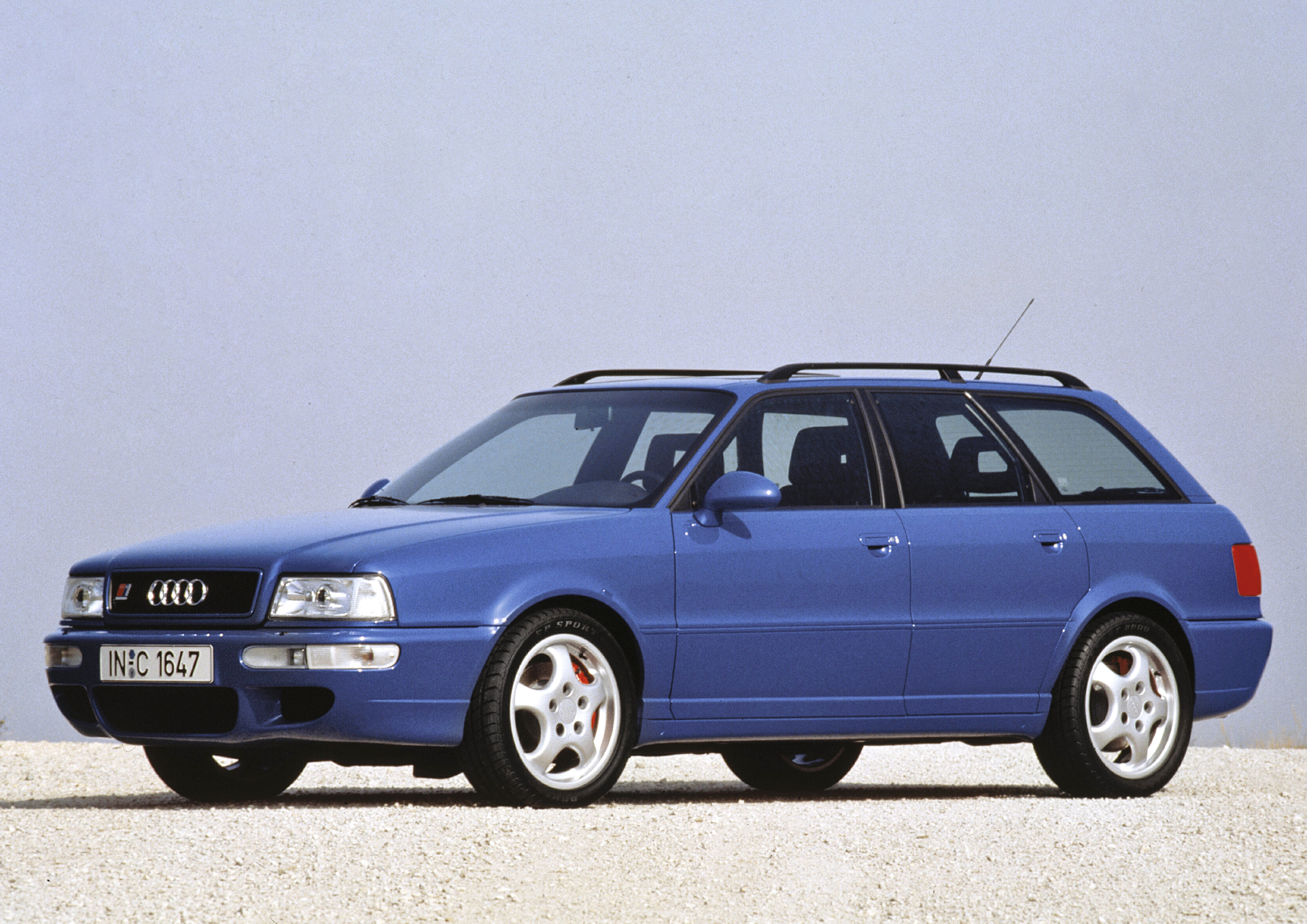
1994: first five-cylinder RS engine
In 1994, the most powerful five-cylinder production engine built by Audi to date goes into action in the Audi Avant RS 2 (B4). With turbocharging, fuel injection and standard-fit emissions control, it produces 232 kW (315 hp) at 6,500 revolutions per minute from a displacement of 2,226 cc and delivers 410 newton meters (302.40 lb-ft) of torque at 3,000 rpm.
1997 – end of an era
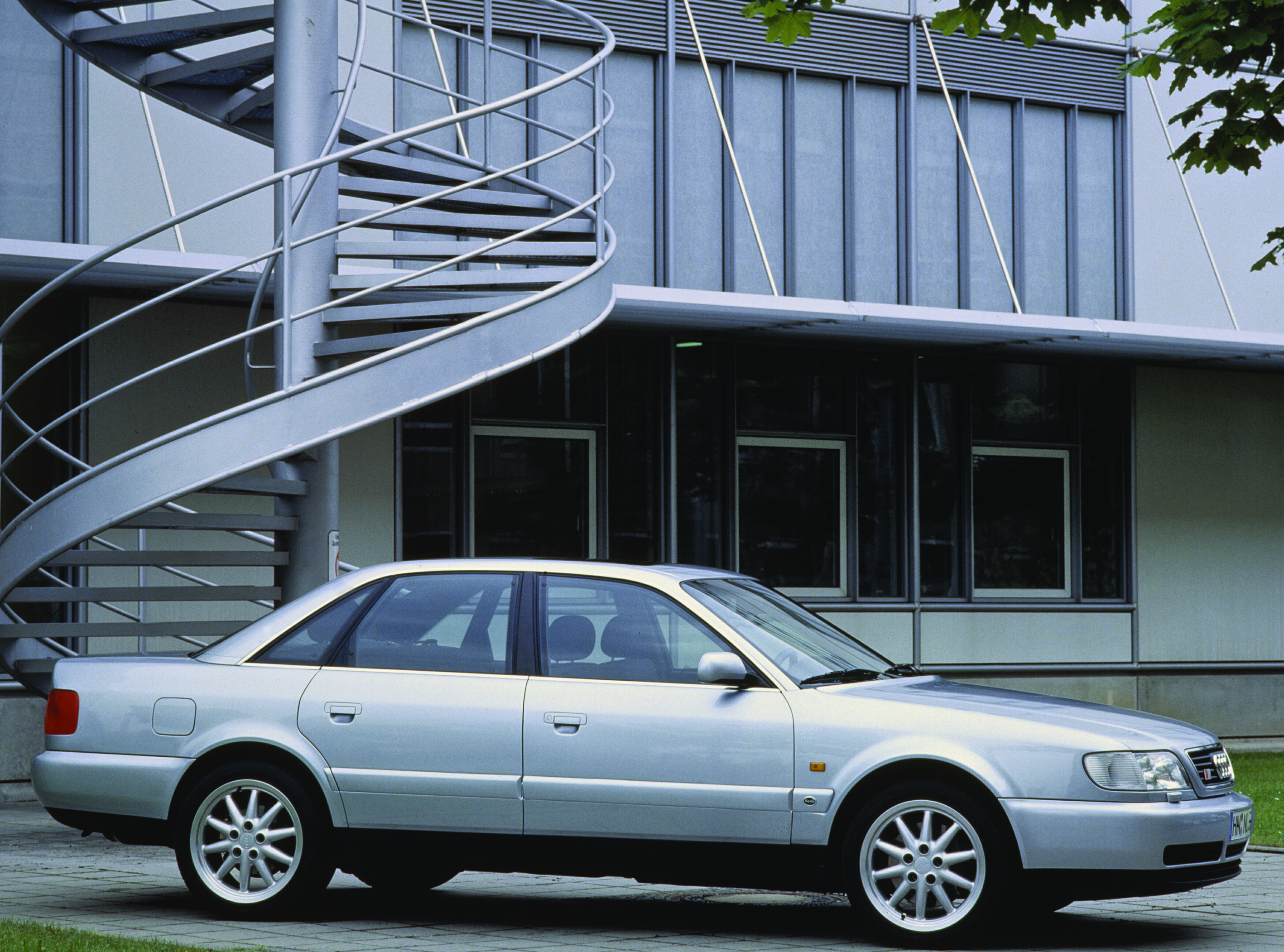
With the introduction of the Audi A4 (B5) in 1994, the five-cylinder engine disappeared from Audi’s B segment. The new V6 engines gradually replaced it during the mid-1990s. The last five-cylinder engines – the 2.5 TDI in the Audi A6 and the 2.2-litre 20V Turbo in the Audi S6 – were discontinued in 1997.
2009: 2.5 TFSI with gasoline direct injection, turbocharger and intercooler
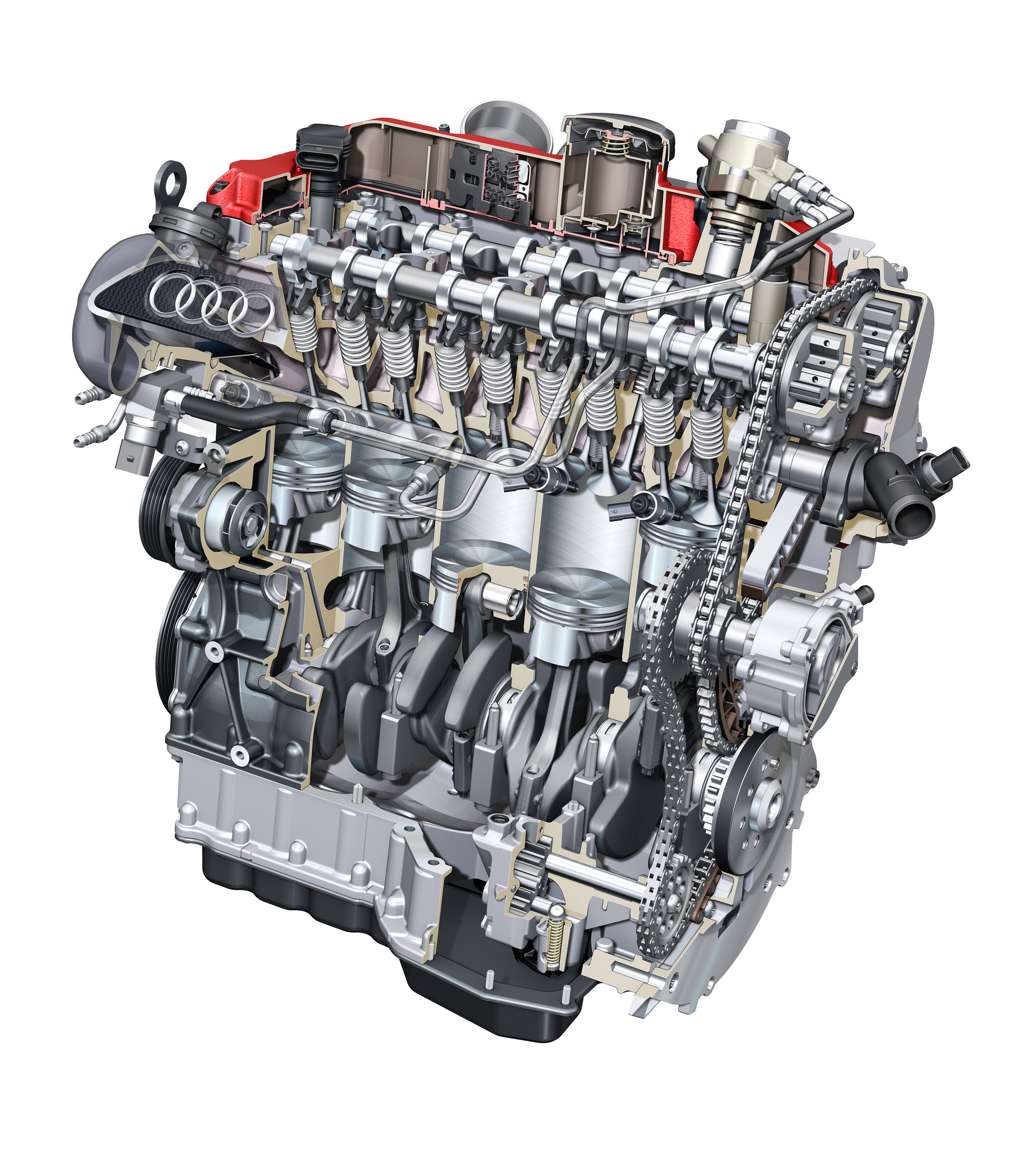
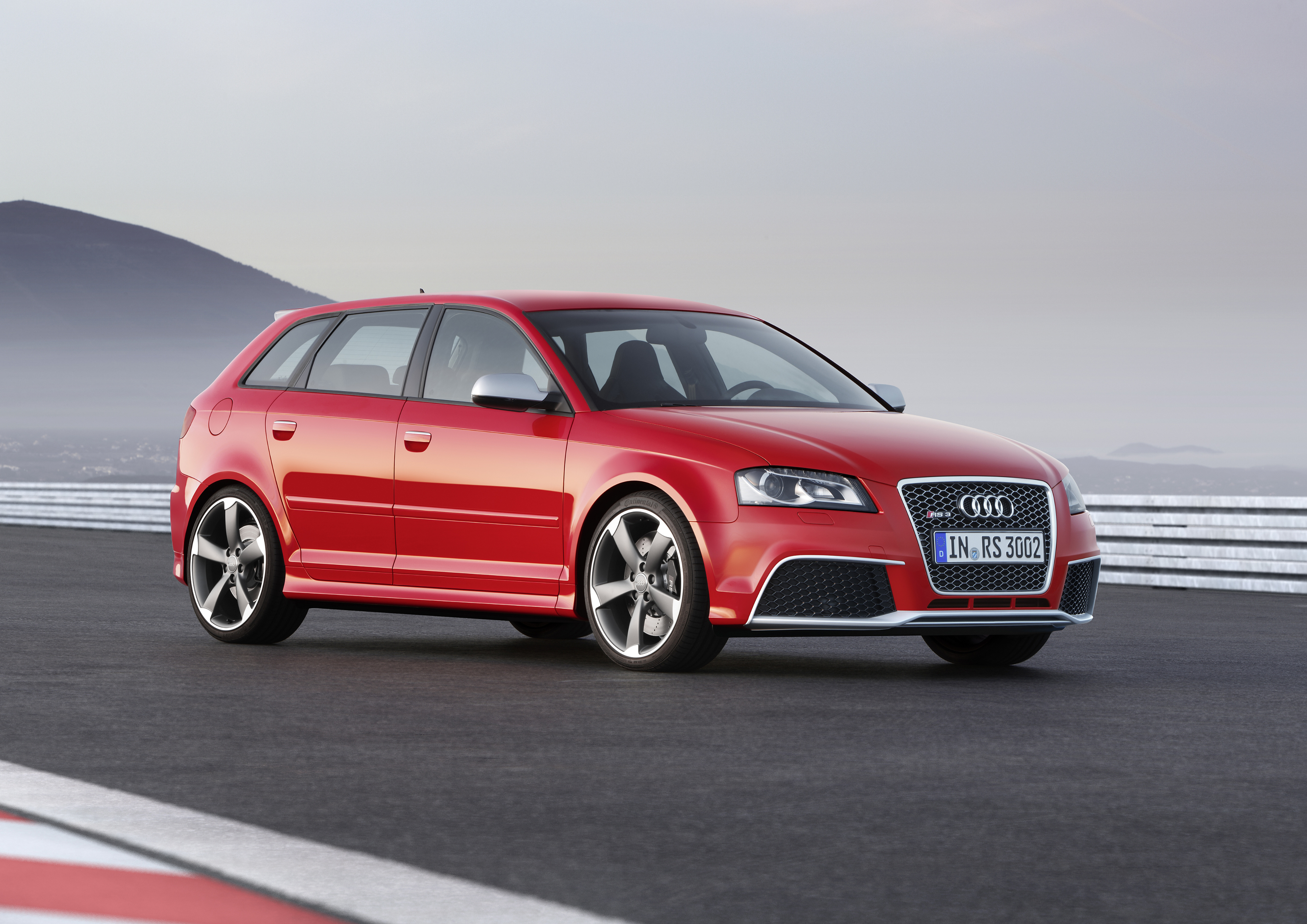
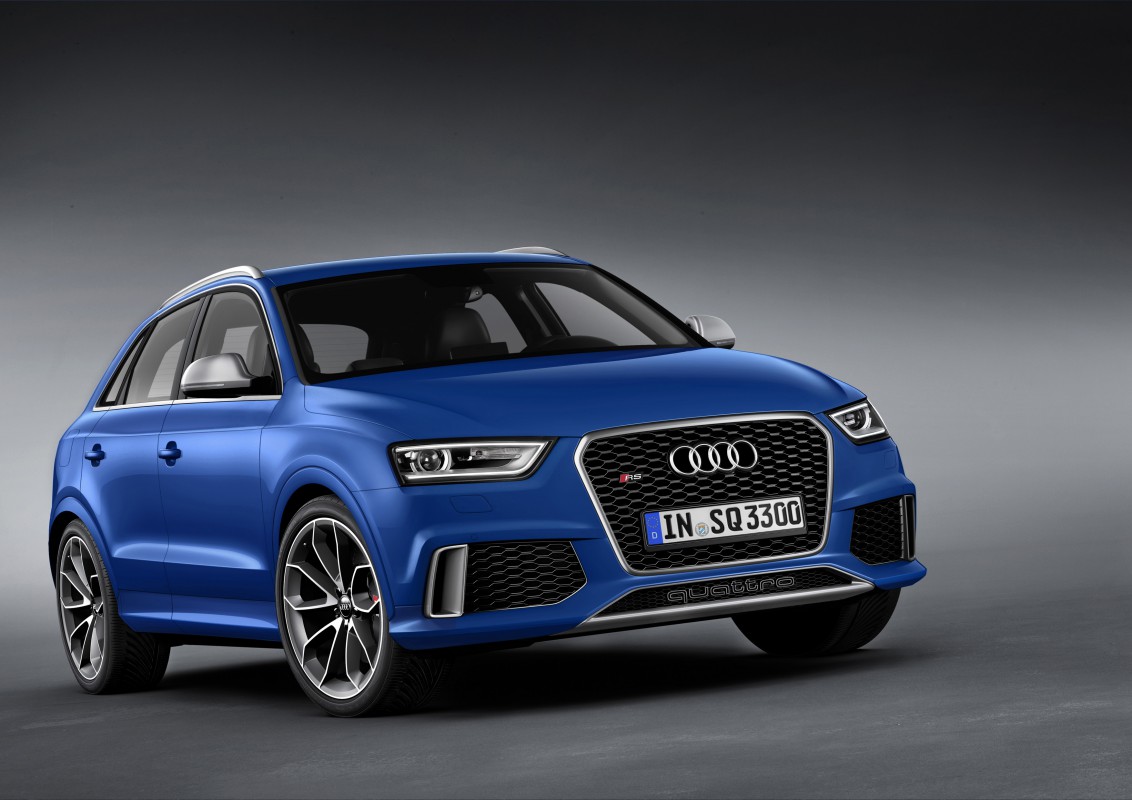
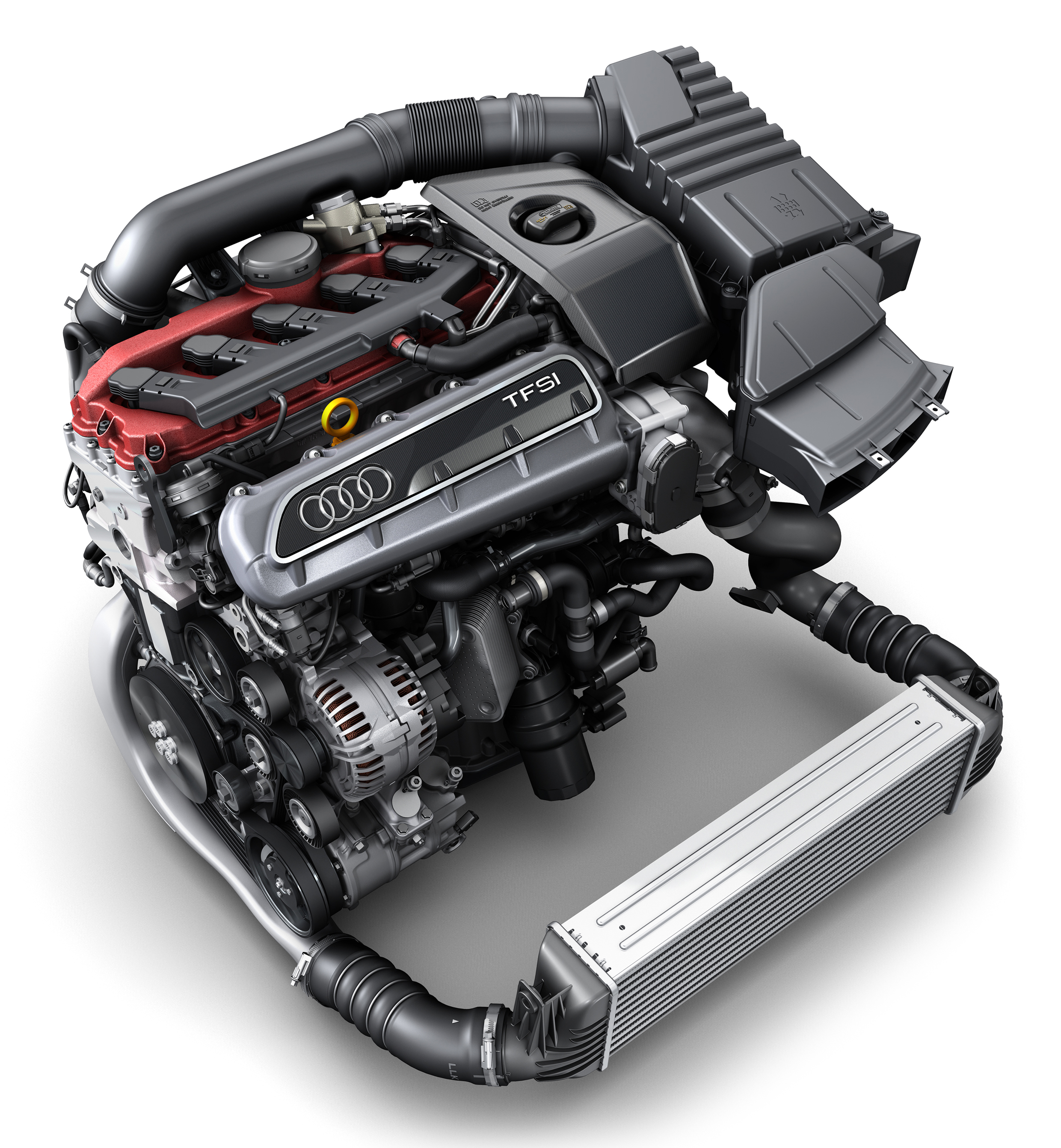
30 years after the first five-cylinder turbocharged gasoline engine was presented, Audi once again introduces a model with a five-cylinder gasoline engine and turbocharger at the Geneva Motor Show: the TT RS. The powerplant delivers 250 kW (340 hp) at 6,500 revolutions per minute from 2,480 cc and 450 newton meters (331.90 lb-ft) at 5,300 rpm. From 2011, this engine is also used in the RS 3 Sportback and from 2014 in the updated RS Q3. In the 2012 TT RS plus, the engine produces 265 kW (360 hp) at 6,700 revolutions per minute and develops 465 newton meters (342.97 lb-ft) of torque at 5,400 rpm.
This picture: Audi RS 3 Sportback, model year 2011
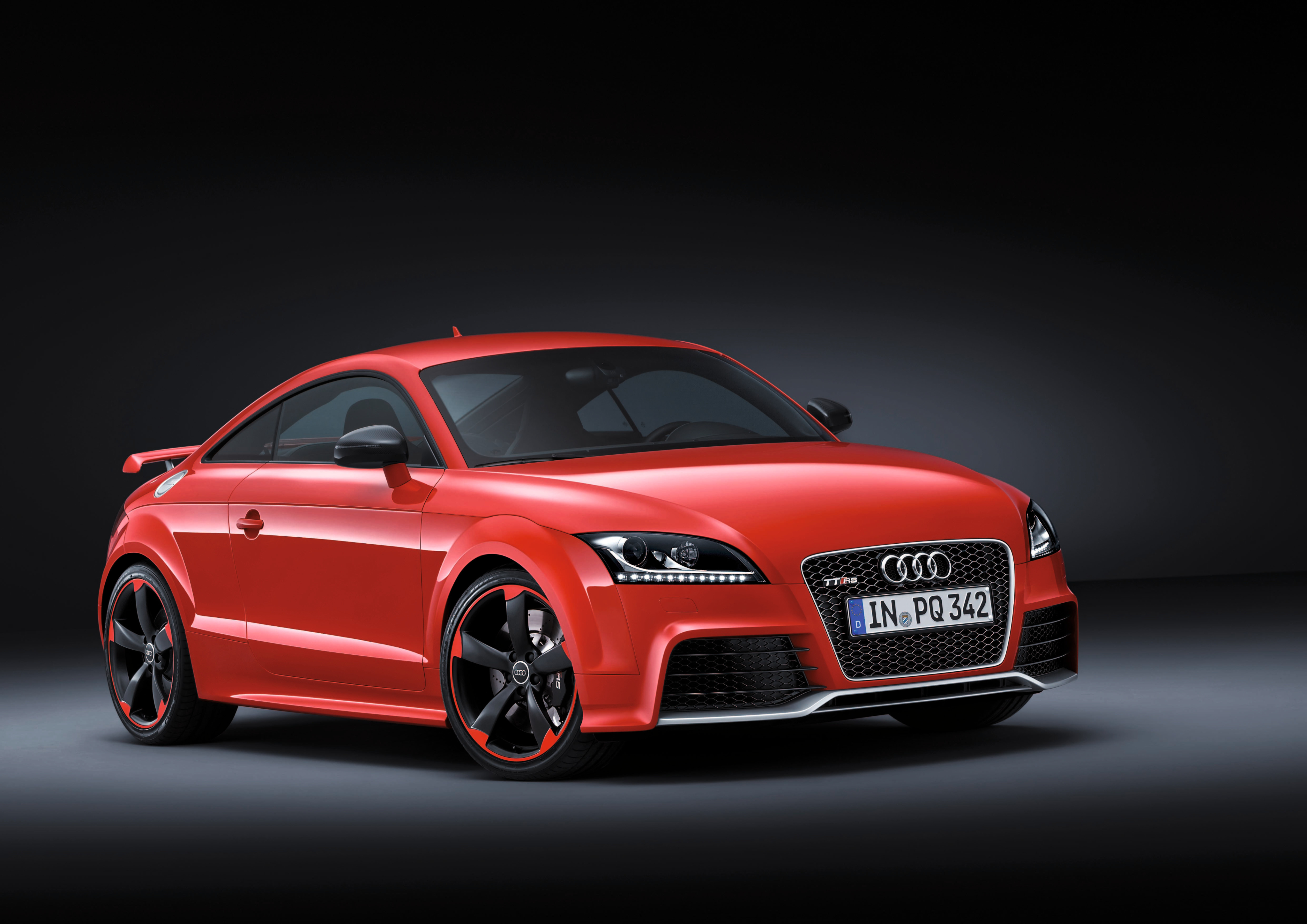
2012:
The TT RS plus, introduced by Audi in 2012, delivered an even more impressive 265 kW (360 PS).
2013:
In 2013, the RS Q3 opened up another market segment as Audi’s first compact SUV. Like the TT RS and RS 3, it was powered by a 2.5-litre five-cylinder engine.
2015: 2.5 TFSI with gasoline direct injection, turbocharger and intercooler
In the summer of 2015, the second-generation RS 3 Sportback* appears – the most powerful car in the premium compact segment with an output of 270 kW (367 hp). The combination of turbocharging and direct injection permits a high compression ratio of 10:1 and correspondingly good efficiency. The five-cylinder inline engine delivers a maximum of 465 newton meters (342.97 lb-ft) to the crankshaft. This torque is available from as low as 1,625 revolutions per minute and remains constant up to 5,550 rpm. Since spring 2016, Audi has been using the optimized version of the powerplant in the Audi RS Q3 performance* too.
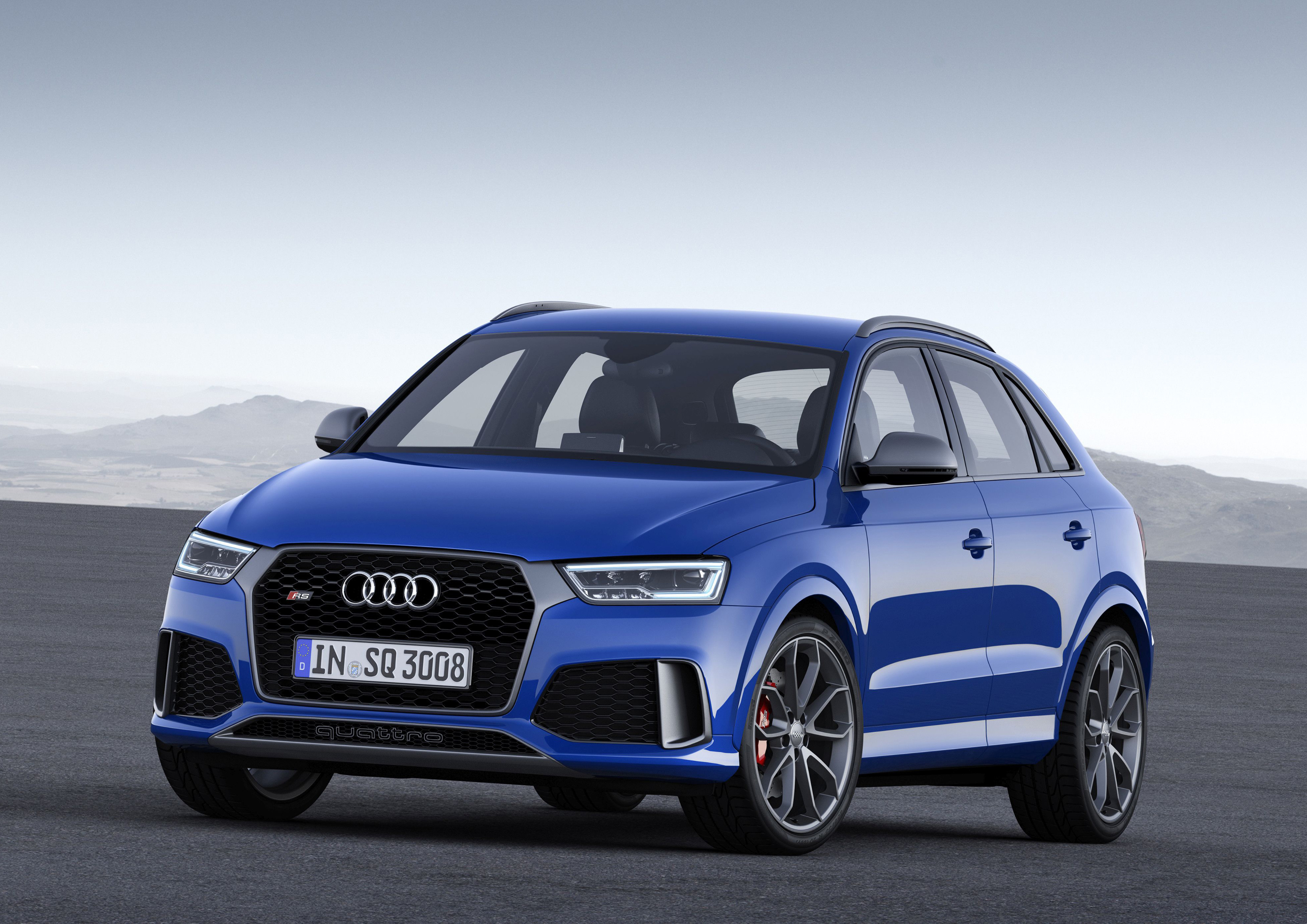
Consumption figures for the models stated
Audi RS 3 Sportback:
Combined fuel consumption in l/100 km: 8,3 – 8,1** (47.0 – 49.0 US mpg);
Combined CO₂ emissions in g/km: 194 – 189** (210.8 – 204.4 g/mi)
Audi RS Q3 performance:
Combined fuel consumption in l/100 km: 8,6 (27.4 US mpg);
Combined CO₂ emissions in g/km: 203 (326.7 g/mi)
**Figures given with ranges depend on the tires/wheels used
2016: 2.5 TFSI with gasoline direct injection, turbocharger and intercooler
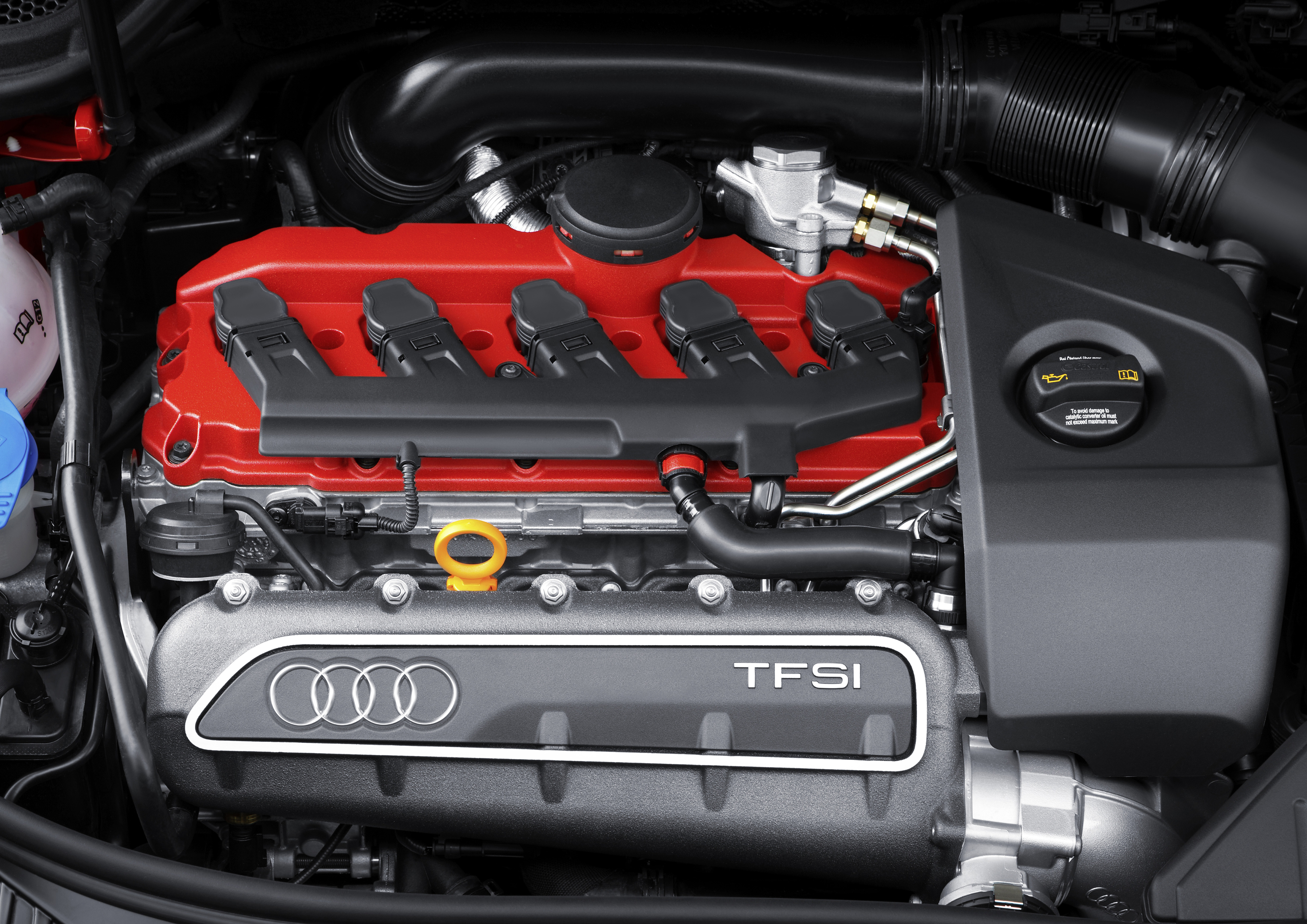
At the Beijing Motor Show in 2016, Audi presents the new TT RS Coupe* and the new TT RS Roadster*. The five-cylinder unit has been enhanced in every area – with lightweight construction measures, reduced internal friction, increased power delivery. From an unchanged displacement of 2,480 cc, the turbocharged engine gains a good 17 percent increase in performance. With an output of 294 kW (400 hp) it is more potent than ever before. The maximum torque of 480 newton meters (354.03 lb-ft) is available between 1,700 and 5,850 revolutions per minute. It ensures outstanding pulling power, which accompanies the unmistakable five-cylinder sound.
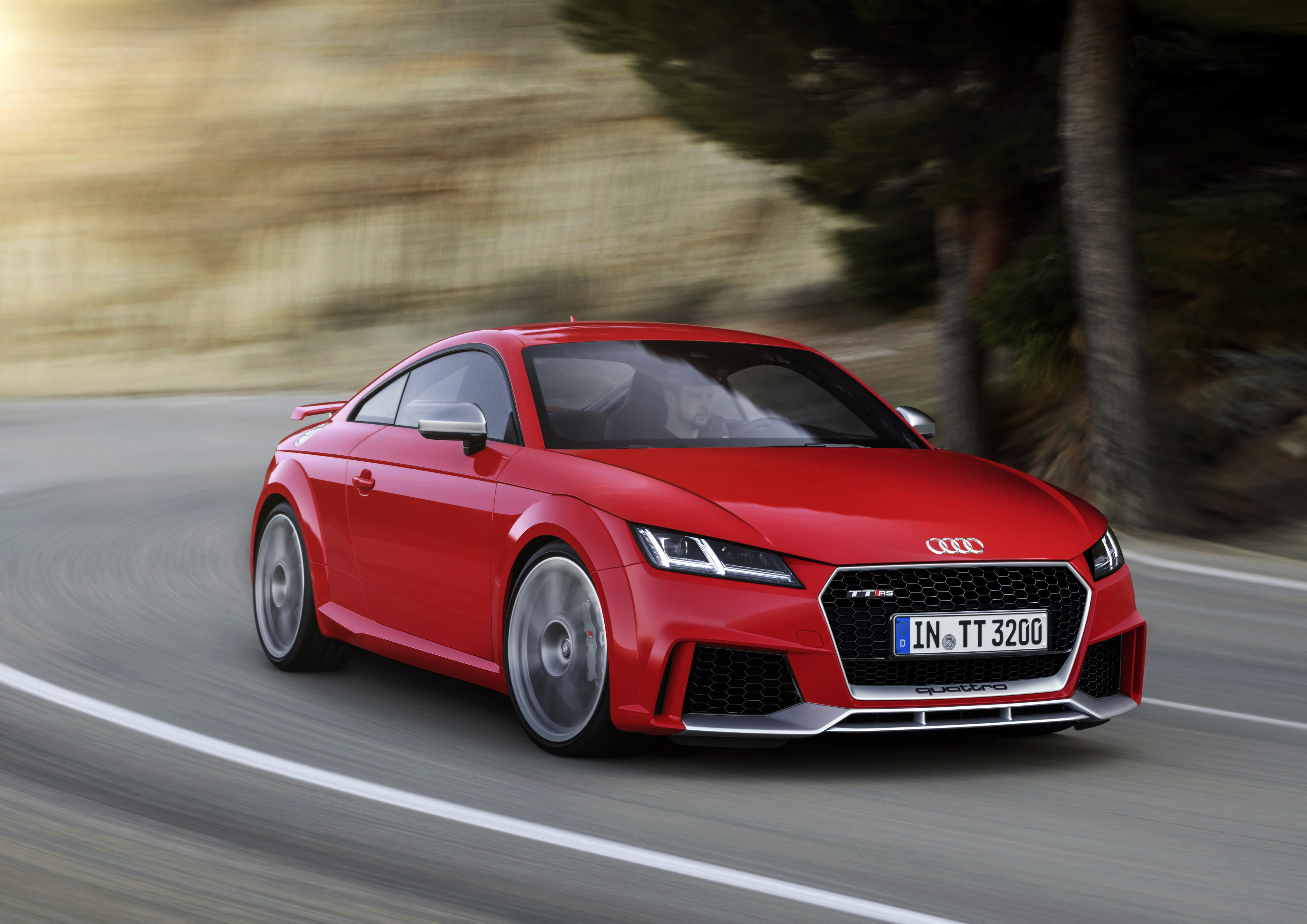
Consumption figures for the models stated
Audi TT RS Coupé:
Combined fuel consumption in l/100 km: 8,4 – 8,2** (28.0 – 28.7 US mpg);
Combined CO₂ emissions kombiniert in g/km: 192 – 187** (309.0 – 300.9 g/mi)
Audi TT RS Roadster:
Combined fuel consumption in l/100 km: 8,5 – 8,3** (27.7 – 28.3 US mpg);
Combined CO₂ emissions kombiniert in g/km: 194 – 189** (312.2 – 304.2 g/mi)
**Figures given with ranges depend on the tires/wheels used
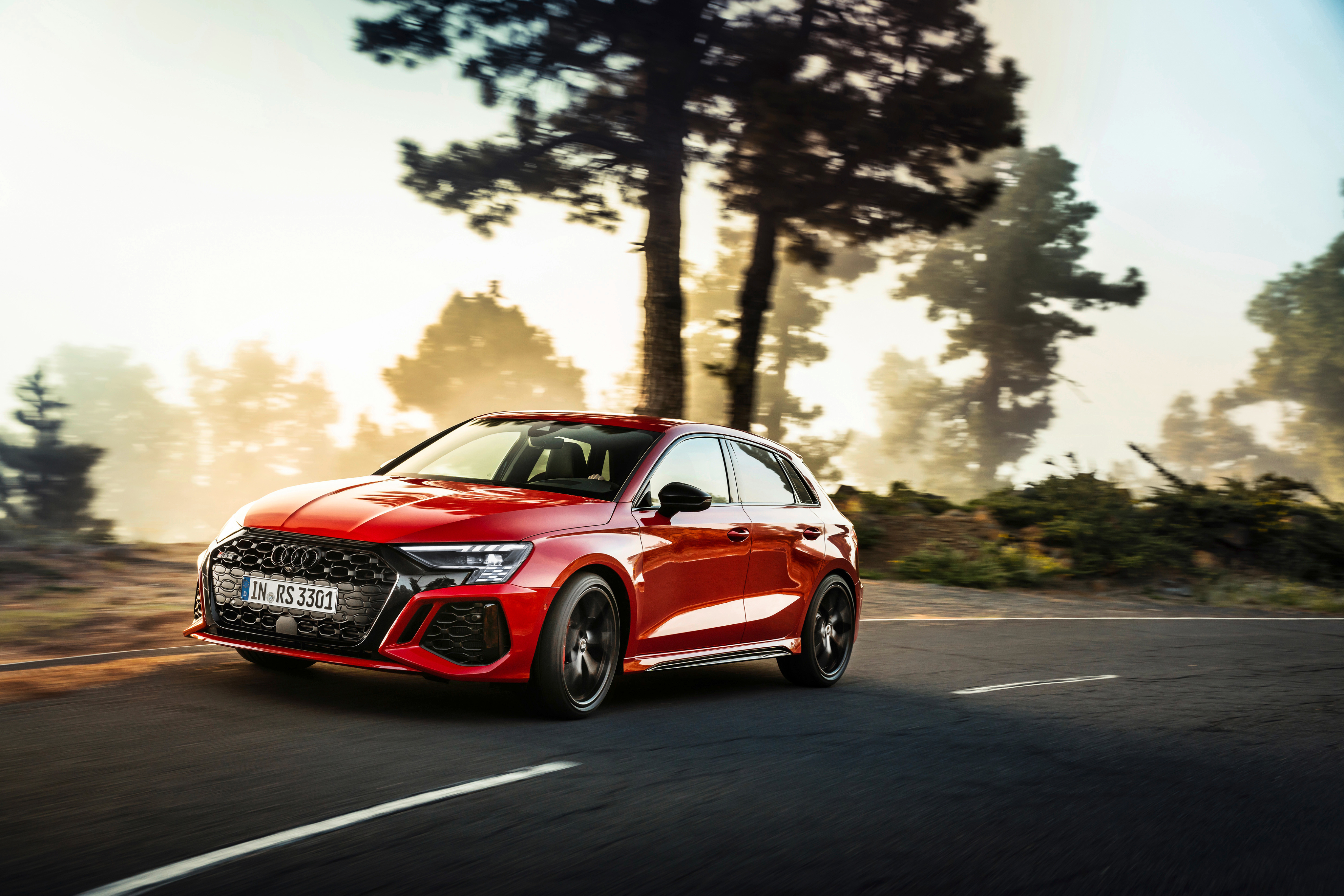
2021:
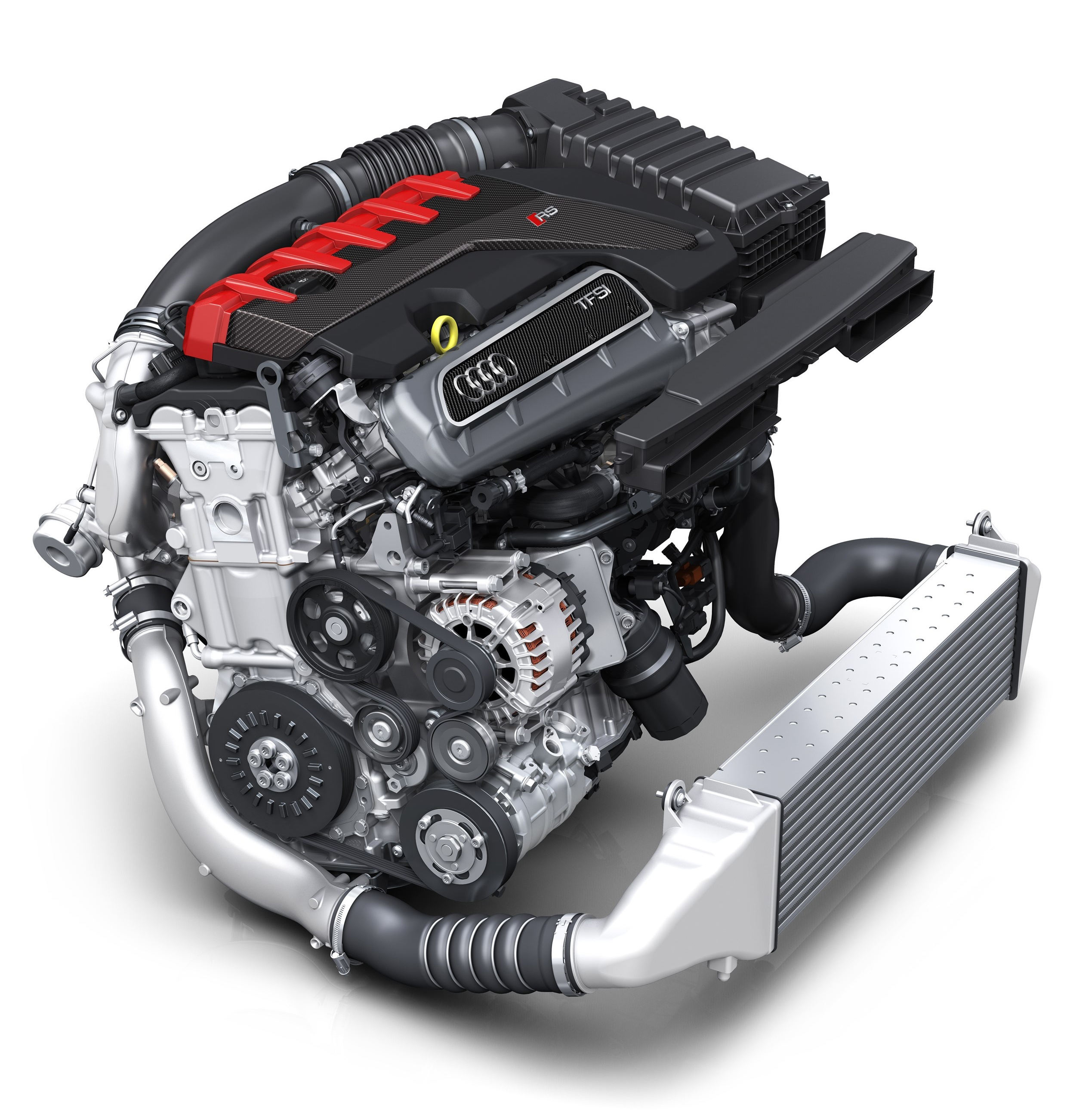
Since 2021, the Audi RS 3 has been powered by a further enhanced version of the 2.5 TFSI, delivering stronger performance than ever before. The compact sports car accelerates from 0 to 100 km/h (62.1 mph) in just 3.8 seconds. Top speed is electronically limited to 250 km/h (155.3 mph), with an optional increase to 280 km/h (174.0 mph). Equipped with the RS Dynamic Package and ceramic brakes, the top speed rises to 290 km/h (180.2 mph). The key to this performance is the increase in maximum torque to 500 Nm (368.8 lb-ft), available between 2,250 and 5,600 rpm – 20 Nm (14.8 lb-ft) more than its predecessor. This enables the Audi RS 3 to accelerate even more forcefully from mid-range engine speeds. Maximum output of 294 kW (400 hp) is available earlier than before, from 5,600 rpm, and remains constant across a broad power band up to 7,000 rpm.
A new engine control unit also ensures faster communication between all powertrain components, further enhancing the vehicle’s dynamic performance.
(Combined fuel consumption in l/100 km: 9.6 – 9.1; Combined CO₂ emissions in g/km: 217 – 207; CO₂ class: G)