In autumn 1973, Audi Development was commissioned to carry out the EA 828 experimental project – the starting point for an engine concept that would later become a hallmark of the Audi brand. However, the path to the five-cylinder engine was by no means straightforward. At a time when engine development was dominated by conventional four- and six-cylinder concepts, the idea initially had to overcome considerable scepticism.
The initiative came largely from Ferdinand Piëch. He drew on experience gained while working for an engineering consultancy between leaving Porsche and joining Audi. Among other projects, the company had developed an in-line five-cylinder diesel engine for Mercedes-Benz.
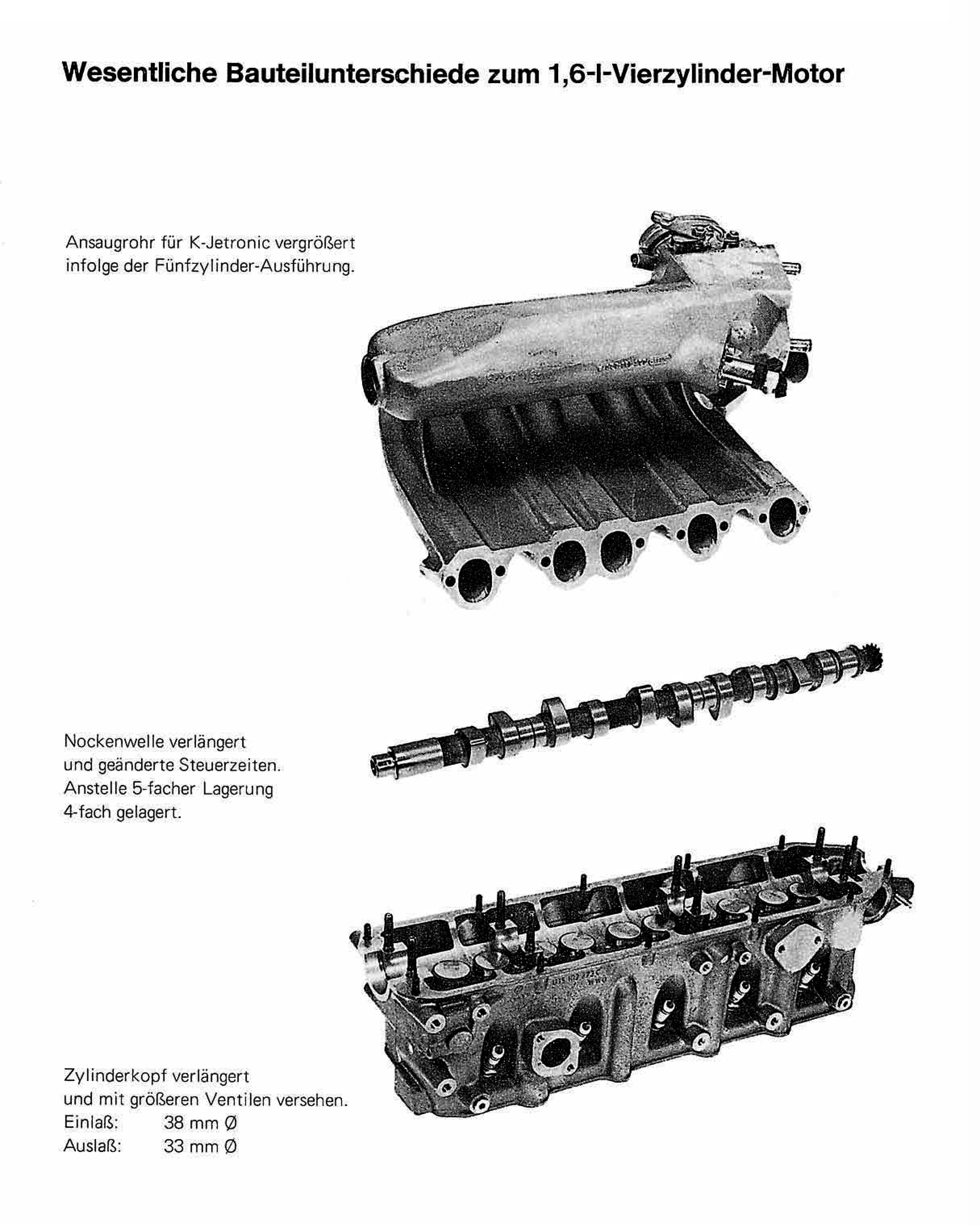
For the new Audi 100, this concept proved to be the ideal compromise: there was no sufficiently powerful four-cylinder engine available, an in-line six-cylinder engine was too long for the available installation space, and there were no production facilities for manufacturing V-engines. By contrast, the in-line five-cylinder engine could be produced on existing production lines while also offering a certain prestige advantage over a conventional four-cylinder engine.
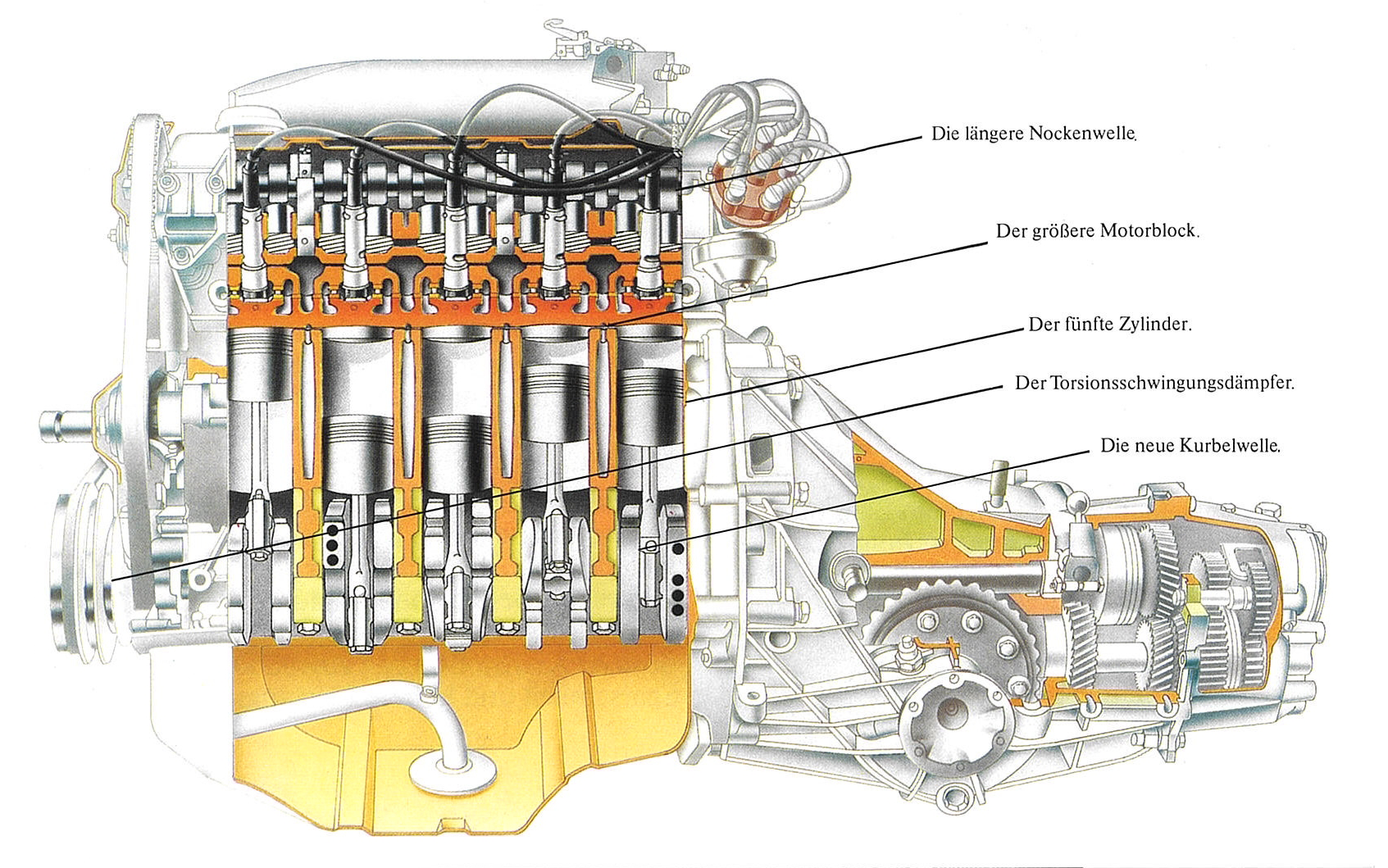
The first design steps were surprisingly pragmatic. Starting with a longitudinal section of the existing four-cylinder engine, an additional cylinder was simply drawn in. On the sepia copies used at the time, the erasures and added pencil marks were still clearly visible. In this way, the 1.5-litre four-cylinder engine became the first 1.8-litre in-line five-cylinder engine.
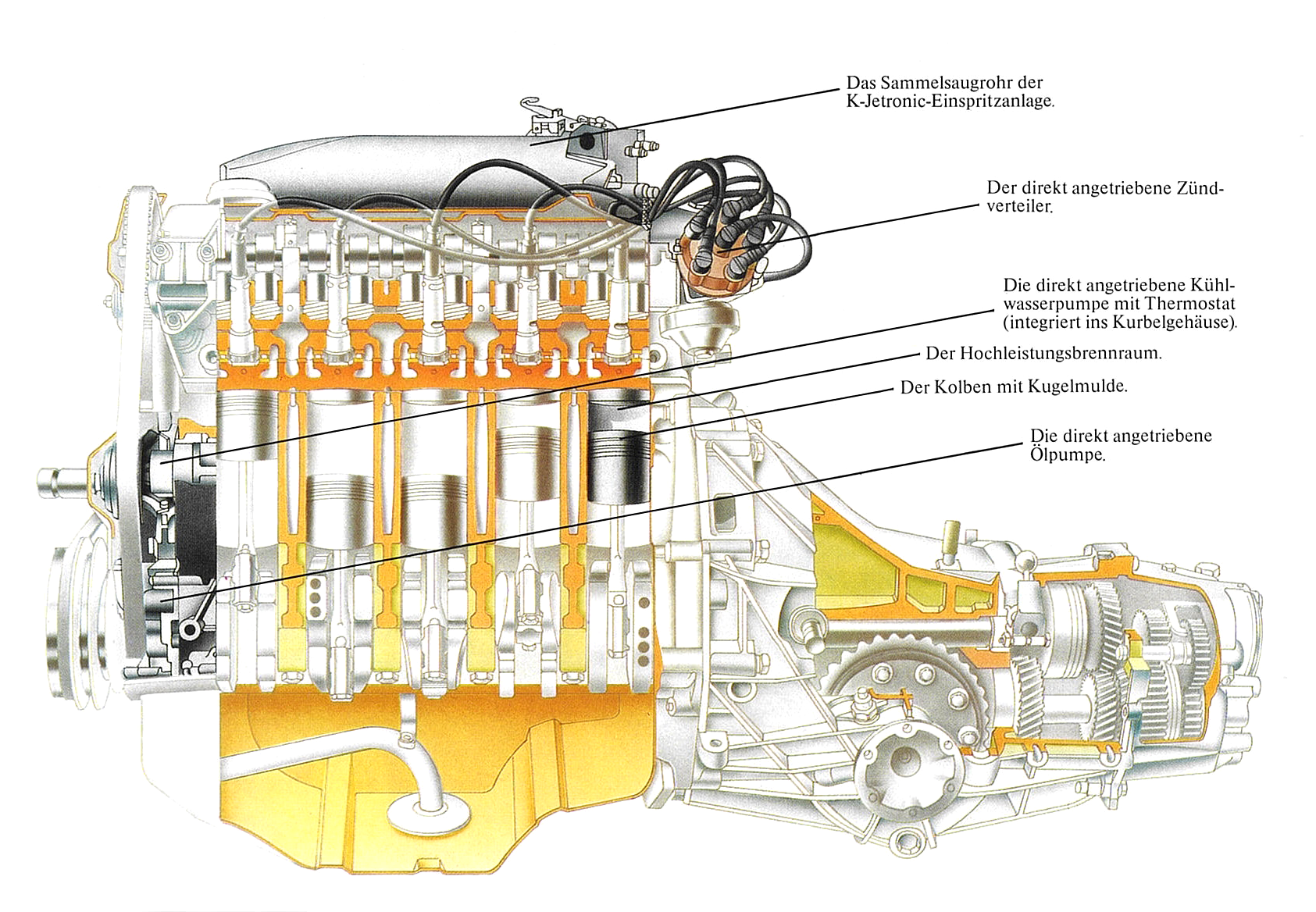
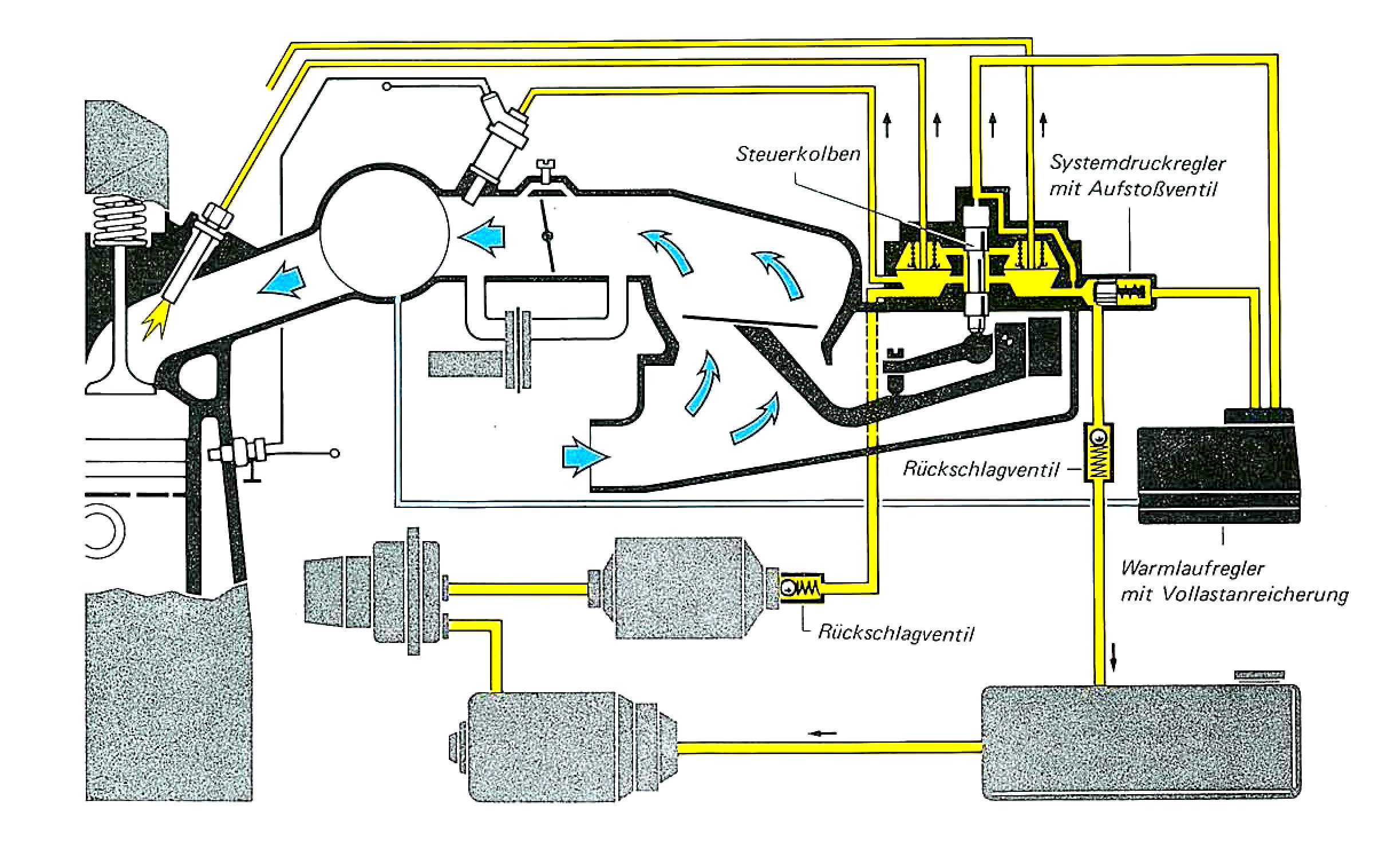
The early test-bench runs were initially carried out using various carburettor systems. However, neither single, twin nor triple carburettors delivered satisfactory results. Only the mechanical K-Jetronic fuel injection system, already familiar from the four-cylinder engine, achieved the desired performance. At the same time, the engine displacement was steadily increased from an initial 1.8 litres to 2.0 litres and finally to 2,144 cm³. For marketing purposes, this became the more memorable “2.2-litre engine”.
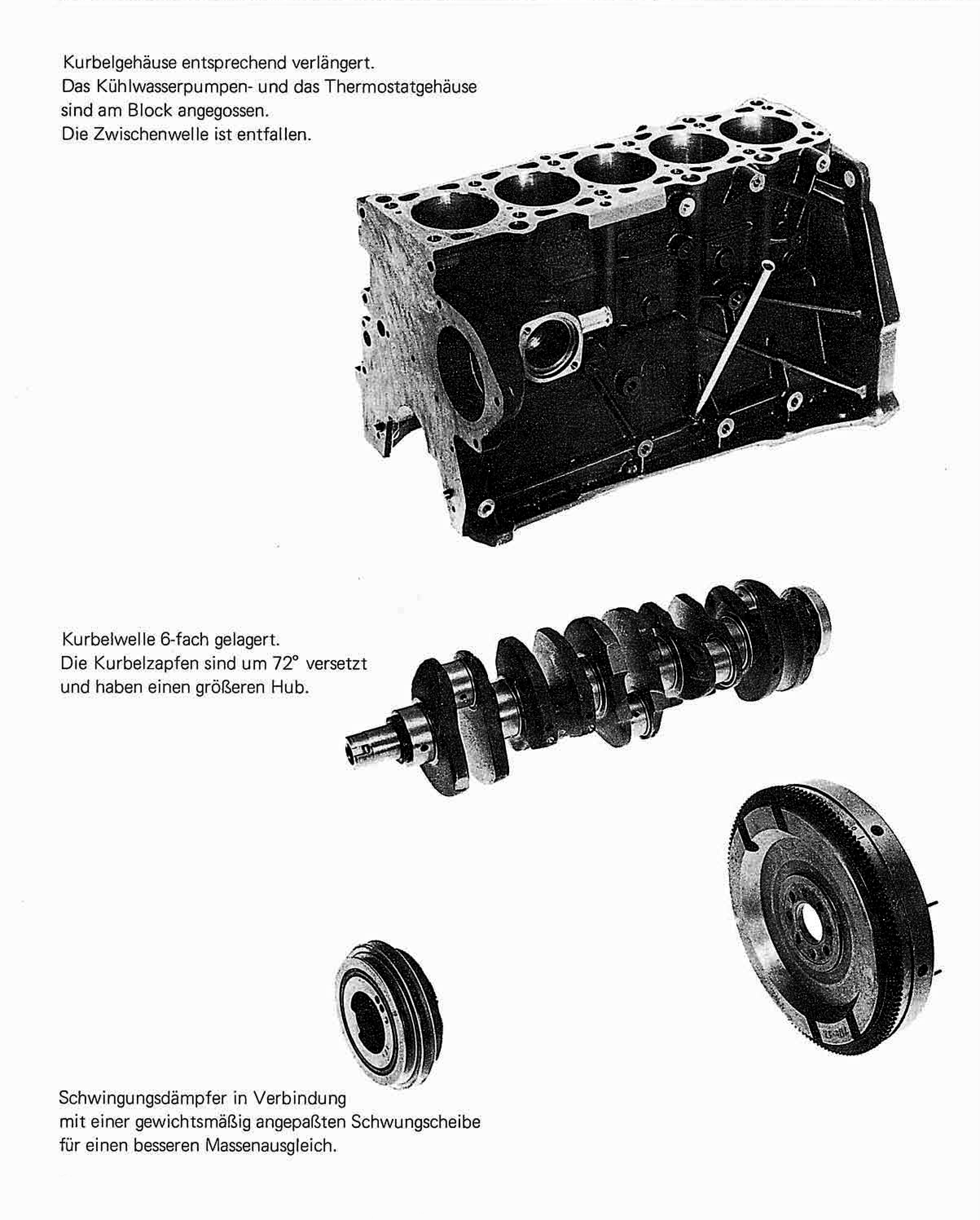
Following the first promising road tests, the engineers eagerly awaited the results of the acoustic and vibration measurements. The findings ultimately confirmed their expectations: although the new engine did not achieve the smoothness of an in-line six-cylinder engine, it clearly surpassed that of a four-cylinder engine. The decision had been made.
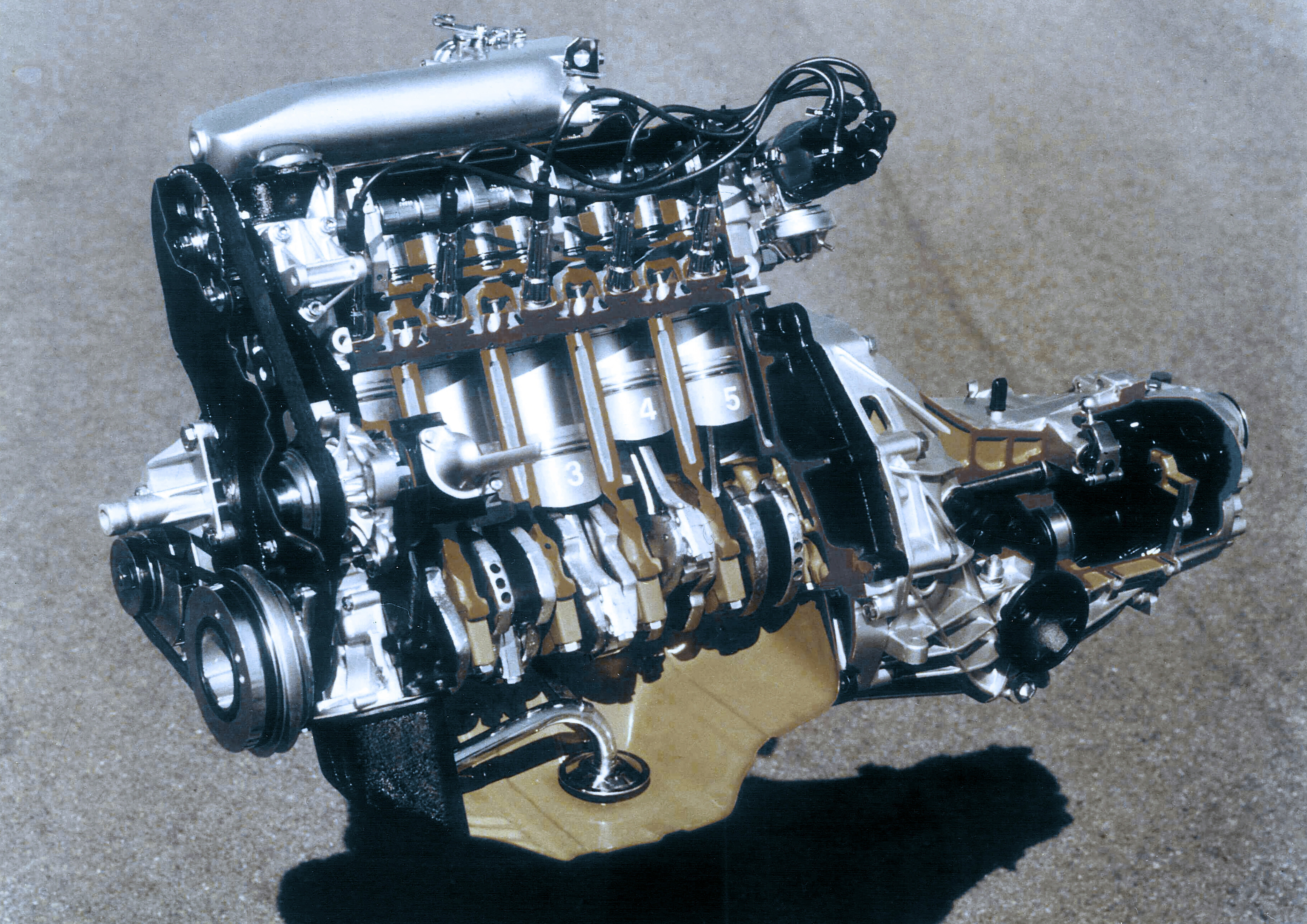
In 1974, the project received final approval. The new five-cylinder engine made its public debut in the autumn of 1976 in the Audi 100 (C2). Series production of the fuel-injected engine, producing 136 PS (100 kW), began in April 1977. It was complemented by a carburettor version with an output of 115 PS (85 kW).