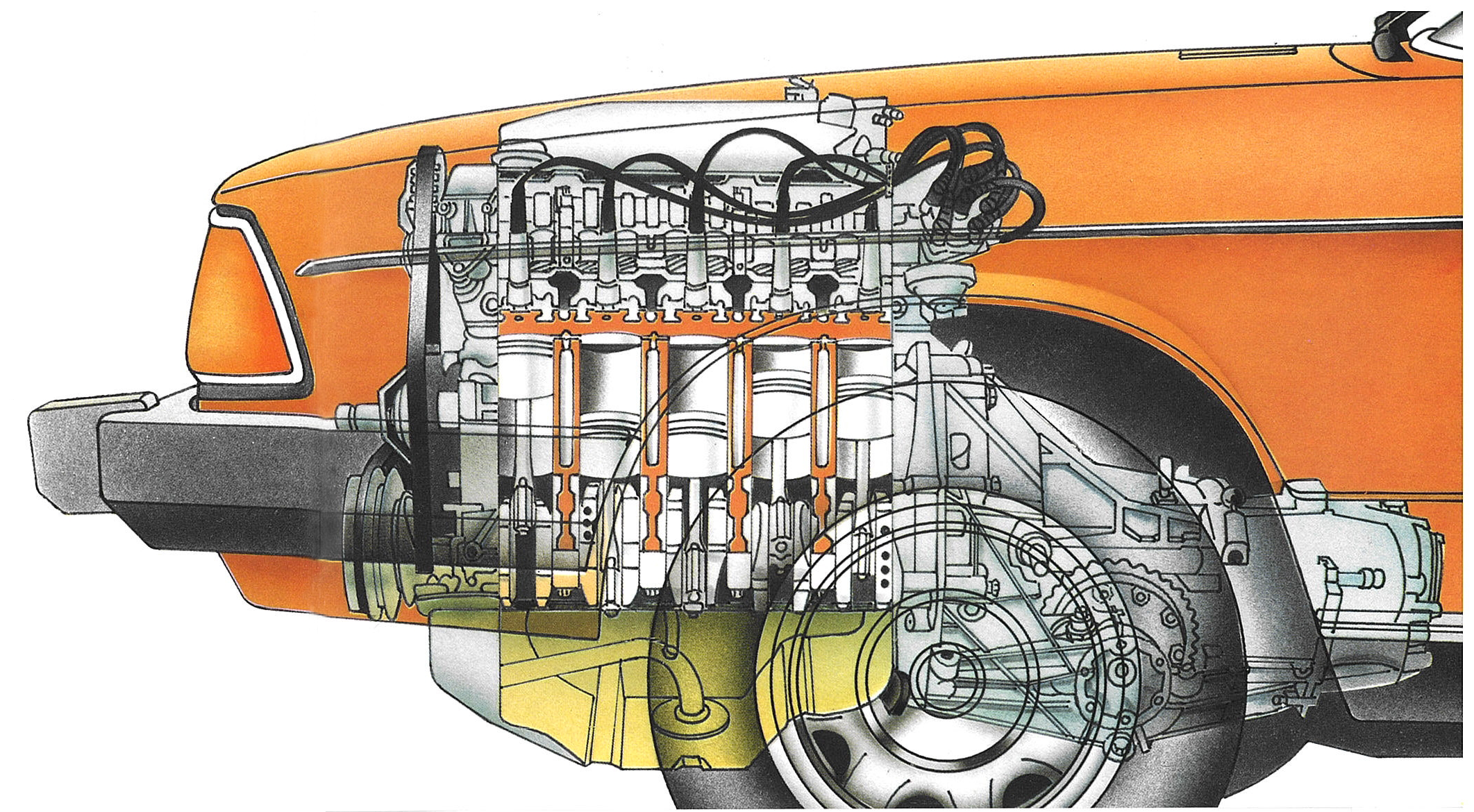
The second generation of the Audi 100 was planned for the 1977 model year. It was intended to build on the success of the first Audi 100 while being positioned slightly higher in the market than its predecessor. It soon became clear that the four-cylinder engines available at the time would not be sufficient for this purpose.
In the early 1970s, Audi therefore began considering both in-line five-cylinder and in-line six-cylinder engines. The latter was ruled out because, in combination with the front-wheel-drive concept, it would have made the vehicles too front-heavy. A V6 engine was also rejected for cost reasons, as it could not have been produced on the existing production lines. This left the in-line five-cylinder engine, which offered ideal conditions as it could be based on the then still relatively new EA 827 engine family.
This proven in-line four-cylinder engine was used in many Volkswagen Group models during the 1970s, including the Volkswagen Golf and Passat as well as the Audi 80 and Audi 100. To create the new engine, the basic engine design was extended by one additional cylinder.